Quick Answer: Male British Shorthairs tend to be more openly affectionate, playful, and sociable with the whole family, while females are more independent, selective in their affection, and quicker to mature. Both sexes share the breed’s signature calm, dignified temperament — but individual personality and socialization history matter just as much as sex when choosing your cat.
Male vs Female British Shorthair Temperament: Key Differences at a Glance
| Trait | Male | Female |
|---|---|---|
| Typical weight | 12–20 lbs (5.4–9 kg) | 8–12 lbs (3.6–5.4 kg) |
| Affection level | Higher, openly demonstrative | Moderate, selective |
| Playfulness | Higher, retained longer | Moderate, matures earlier |
| Bonding style | Whole-family bonding | Often one primary person |
| Tolerance of handling | Higher | Moderate |
| Territorial behavior | Low (when neutered) | Moderate |
| Trainability | Good | Good to very good |
| Maturity timeline | 3–5 years | 2–3 years |
| Best for | Families, children, multi-pet homes | Quieter homes, seniors, bonded pairs |
Does Sex Really Matter That Much?
It’s one piece of the puzzle, not the whole picture. Sex-based tendencies in British Shorthairs are real and consistent enough to be worth knowing — but they’re statistical patterns, not guarantees. A female raised in a busy, affectionate household from kittenhood can be just as cuddly as any male. A poorly socialized male can be standoffish regardless of breed. Always meet the individual cat, and ask your breeder about the specific kitten’s personality before deciding.
British Shorthair Breed Overview: Temperament Foundations
A Breed Built on Calm and Loyalty
The British Shorthair is one of the most emotionally stable cat breeds you’ll find. Affectionate without being clingy, intelligent without being demanding, and adaptable without being pushovers — that balance didn’t happen by accident. It’s the product of nearly two thousand years of working alongside humans.
How History Shaped the British Shorthair Personality
Roman soldiers brought the ancestors of today’s British Shorthair to Britain around 43 AD, where these cats earned their keep as skilled mousers on farms, ships, and in granaries. Centuries of independent work bred a self-sufficient, unflappable temperament into the line. Then in 1871, cat fancier Harrison Weir organized the world’s first formal cat show at Crystal Palace, London, beginning the process of selective breeding for both looks and temperament.
Both World Wars nearly wiped the breed out entirely. Post-WWII breeders crossed surviving British Shorthairs with Persians — and to a lesser extent Russian Blues and Chartreux — to rebuild numbers. That Persian influence introduced the plush double coat and rounder features we recognize today. Decades of careful selective breeding through the 1970s restored the classic type. The result is a breed with a working cat’s independence and a companion cat’s warmth.
The British Shorthair is also widely believed to have inspired Lewis Carroll’s Cheshire Cat in Alice’s Adventures in Wonderland. That broad, round face and perpetual half-smile are hard to argue with — there’s something knowing and unruffled about their expression that perfectly captures the character.
Male British Shorthair Temperament: What to Expect
Affection and Sociability
Male British Shorthairs wear their hearts more openly than females. They’re more likely to seek you out for a cuddle, follow you from room to room, and settle in your lap uninvited. That said, they’re still British Shorthairs — “openly affectionate” means warm and consistent, not overwhelming or needy.
Males also tend to be more comfortable with strangers and new situations. Where a female might observe a guest from the top of the stairs, a male is more likely to wander over and investigate.
Playfulness and the ‘Class Clown’ Factor
Males retain their kitten-like goofiness well into adulthood — sometimes all the way to age five or beyond. Breeders often describe them as the class clowns of the breed: more likely to chase their own tail, perform accidental acrobatics off the sofa, or present you with a toy at 11 pm. If you want a cat with a sense of humor, a male is your better bet. A good wand toy gets the best out of this playful streak.
Bonding With the Whole Family
Where females often form a close attachment to one primary person, males tend to spread the love. They’re more consistently friendly with every member of the household — including children — and generally more tolerant of being handled by multiple people. This makes them a natural fit for busy family homes.
How Neutering Shapes Male Behavior
Intact males can spray, roam, and become territorial — none of which you want indoors. Neutering at around four to six months eliminates these behaviors in most cases and leaves you with one of the most easygoing cats of any breed. If you’re adopting a male, neutering isn’t just recommended — it’s transformative.
Female British Shorthair Temperament: What to Expect
Independence and Selective Affection
Female British Shorthairs are affectionate, but on their own schedule. They’ll come to you when they’re ready, accept a certain amount of attention, and then move along — and they’re quite clear about that boundary. This isn’t aloofness; it’s dignity. Many owners find it deeply charming once they stop expecting lap-cat behavior on demand.
Females also reach emotional maturity faster, typically by two to three years of age, which means you get a settled, consistent companion sooner.
Observant Intelligence and Problem-Solving
Females are often described as sharper and more focused than males. They’re more likely to study a situation before acting — watching, calculating, then moving with purpose. This makes them slightly easier to engage in short, focused training sessions using positive reinforcement, and they tend to figure out puzzle feeders with impressive efficiency. A multi-stage puzzle feeder is an excellent investment for a female British Shorthair. (Trixie 5-in-1 Activity Center)
Territorial Tendencies and Personal Boundaries
Female British Shorthairs have a stronger sense of personal space, particularly around other cats. They’re more likely to establish and defend territory — worth factoring in if you have existing pets. With humans, that same quality shows up as clear, consistent limits: they’ll tell you when they’ve had enough, usually by simply walking away.
How Spaying Affects Female Behavior
Unspayed females cycle into heat every two to three weeks during breeding season, bringing restlessness, persistent vocalization, and behavioral changes that are stressful for both cat and owner. Spaying eliminates all of that. It also dramatically reduces the risk of mammary tumors — especially when done before the first heat — and prevents pyometra, a life-threatening uterine infection. Spayed females keep their characteristic independence and selective warmth. Spaying doesn’t flatten their personality; it removes the hormonal chaos that obscures it.
Choosing Between a Male and Female British Shorthair
Best Match for Families With Children
Males are generally the stronger choice for households with young children. Their higher tolerance for handling, whole-family bonding style, and longer-lasting playfulness mean they’re more likely to roll with the unpredictability of family life. Patient, sociable, and rarely rattled — they suit busy homes well.
Best Match for Single Owners or Seniors
A female British Shorthair can be a deeply rewarding companion for someone living alone or in a quieter household. Her tendency to bond closely with one primary person means that person gets a loyal, attentive companion — just one who operates on her own terms. Seniors often appreciate the lower-energy, lower-drama dynamic females bring.
Multi-Cat Households: Which Sex Integrates Better?
Neutered males typically integrate more smoothly into multi-cat homes. Their lower territorial drive reduces conflict, and opposite-sex pairings — one male, one female, both altered — are often the most harmonious combination. Two females can work well if introduced carefully, but territorial friction is more common. Two males are usually fine once neutered, though introductions still need to be managed properly.
Personality Over Sex: Why Individual Variation Matters
No breeder will tell you sex is destiny. Some of the most affectionate British Shorthairs on record are female; some males are perfectly content to be admired from a distance. Kittenhood socialization, the cattery environment, and plain individual personality all shape a cat’s character significantly. A good breeder will know each kitten well enough to match you thoughtfully — always ask.
Exercise, Enrichment, and Grooming Essentials
Daily Activity and Mental Stimulation
The British Shorthair is a low-to-moderate energy breed, but that doesn’t mean no exercise is needed. Obesity is a genuine risk, and regular play is the best prevention.
- Kittens (under 1 year): 30–45 minutes of interactive play daily
- Adults (1–7 years): 20–30 minutes daily, split into 2–3 shorter sessions
- Seniors (7+ years): 15–20 minutes of gentle play; watch for joint stiffness
Males may stay in the higher range of these needs longer; females often settle into a calmer routine earlier. Rotate toys every few days to keep things novel, and consider short clicker-training sessions — five to ten minutes of positive-reinforcement training is excellent mental exercise and strengthens your bond. A sturdy cat tree gives both sexes the vertical territory they appreciate.
Swap a portion of daily food into a puzzle feeder or foraging toy to slow eating and engage their brain — this is especially important for the food-motivated male who would happily eat himself into obesity.
Grooming the British Shorthair Coat
The British Shorthair’s coat is plush and dense, with a thick undercoat that stands away from the body rather than lying flat. It doesn’t mat easily, but it does shed year-round — with heavier seasonal blows in spring and fall.
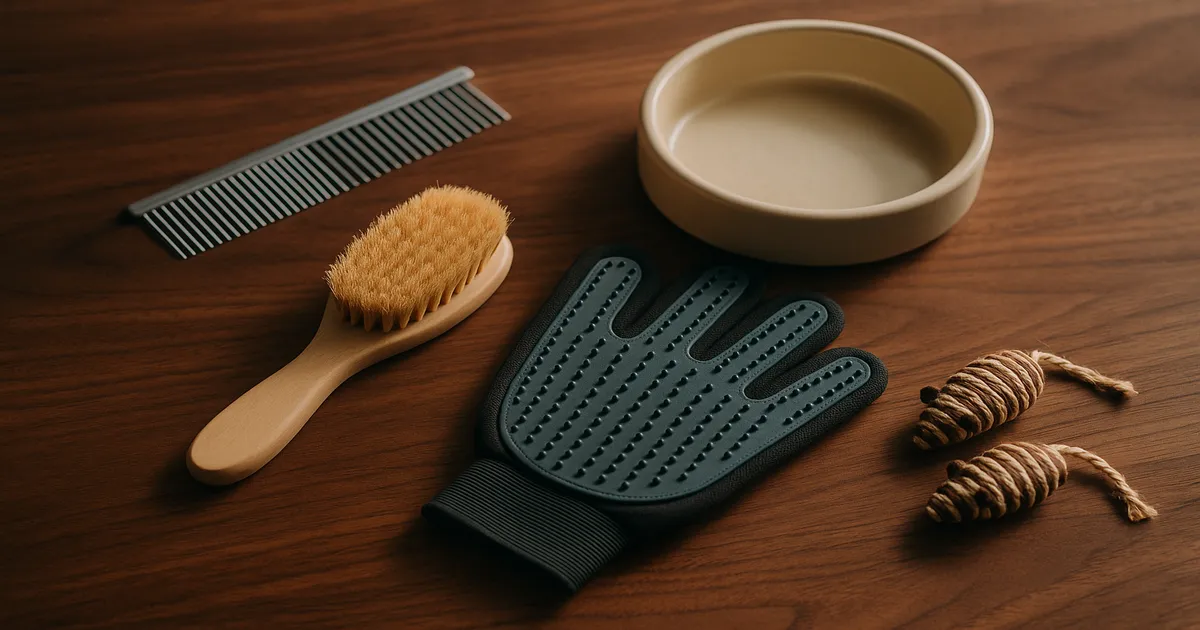
During most of the year, two to three brushing sessions per week keeps things manageable. A wide-tooth stainless steel comb is your primary tool, and a rubber grooming glove is excellent for removing loose hair while most cats genuinely enjoy the sensation. During shedding seasons, step up to daily brushing and consider an undercoat deshedding tool to stay ahead of the coat blow.
Trim nails every two to three weeks, check ears weekly, and take dental care seriously. The breed’s slightly rounded facial structure increases the risk of dental crowding and periodontal disease. Aim for brushing teeth at least three times per week with an enzymatic cat toothpaste — daily is better. These routines apply equally to both males and females.
British Shorthair Health: Key Conditions to Know
Hypertrophic Cardiomyopathy (HCM)
HCM — a thickening of the heart muscle wall — is the most serious health concern in British Shorthairs. Estimates of prevalence vary, but the condition is well-documented in the breed and can lead to congestive heart failure, blood clots, and sudden death. Annual echocardiograms are strongly recommended. Source kittens only from breeders who screen breeding cats for HCM and provide documentation.
Polycystic Kidney Disease (PKD)
PKD entered the breed via Persian outcrossing and causes progressive kidney damage from fluid-filled cysts. A reliable DNA test exists for the PKD1 mutation, and responsible breeders test all breeding cats. Prevalence has dropped significantly in well-managed programs. Always ask for PKD-negative certificates when sourcing a kitten.
Obesity, Joint Health, and Dental Disease
Obesity is the most common preventable health problem in British Shorthairs. Their calm temperament and strong food motivation are a risky combination without measured feeding and regular exercise. Excess weight compounds joint stress in a breed already carrying a heavy, compact frame — arthritis becomes more likely and more painful as they age. Consistent home dental care is equally important and genuinely non-optional for this breed.
Lifespan and Preventive Care
British Shorthairs typically live 12–17 years, with many reaching their late teens in good health. Indoor-only living, regular veterinary check-ups, annual cardiac screening, weight management, and up-to-date vaccinations are the pillars of a long, healthy life.
Frequently Asked Questions: British Shorthair Temperament Male vs Female
Are male or female British Shorthairs more affectionate?
Males are generally more openly affectionate — more likely to seek lap time, initiate cuddles, and follow you around the house. Females are affectionate too, but more selectively and on their own schedule. If consistent, demonstrative warmth is your priority, a male is usually the better fit.
Do male British Shorthairs get along better with other cats?
Neutered males typically integrate more smoothly into multi-cat households because they’re less territorial and more socially relaxed. Females tend to have stronger territorial instincts and may take longer to accept a new feline housemate. Opposite-sex pairings — both altered — are often the most harmonious combination.
Does neutering or spaying change a British Shorthair’s personality?
Yes, in important and positive ways. Neutering eliminates spraying, roaming, and territorial aggression in males while leaving their core personality intact. Spaying removes heat-cycle behavior in females without affecting their characteristic independence. Neither procedure flattens personality — it removes the hormonal behaviors that obscure it.
Which sex is better for families with children?
Males are usually the better choice for families with young children. Their higher tolerance for handling, consistent sociability with multiple people, and longer-lasting playfulness make them more resilient in a busy household. A well-socialized female from a reputable breeder can also thrive in a family environment — individual temperament always matters.
Are female British Shorthairs harder to bond with?
Not harder — just different. Females bond deeply, but selectively. They tend to attach closely to one primary person and show affection on their own terms. Once that bond forms, it’s loyal and consistent. Owners who respect a female’s boundaries often find the relationship just as rewarding as any male’s more obvious warmth.