Quick Answer: If you’re wondering whether to give up on crate training, the answer is almost certainly no — not yet. Most struggles come down to a process problem, not a broken method. Slow down, troubleshoot the specific issue, and the vast majority of dogs can learn to love their crate. The one genuine exception is a dog with clinically diagnosed separation anxiety — for those dogs, crating can make things worse, and a different approach is needed.
If you’re Googling “do I give up on crate training,” you’re probably exhausted, guilt-ridden, and listening to your dog bark at 2 a.m. You’re not alone — around 30–40% of new dog owners hit a serious wall in the first month. But before you haul that crate to the curb, know this: the method itself is sound. The American Veterinary Society of Animal Behavior (AVSAB), the Association of Professional Dog Trainers (APDT), and the AKC all endorse properly implemented crate training as a humane, welfare-positive tool.
Should You Give Up on Crate Training?
Almost certainly not yet. The vast majority of crate training struggles come down to moving too fast, skipping steps, or not accounting for your individual dog’s needs — not a flaw in the method itself. This article is a troubleshooting guide, not a guilt trip.
When pushing through is the right call: If your dog is whining or protesting but is otherwise physically fine, you’re dealing with a normal part of the process. Staying consistent — while adjusting your approach — is the right move.
When stopping really is the right decision: If your dog has been professionally diagnosed with clinical separation anxiety, crating can cause genuine harm by intensifying panic. There are also legitimate alternatives for senior dogs with cognitive decline, dogs with physical disabilities, and owners who simply cannot commit the time the process requires. More on all of that below.
Why Crate Training Feels So Hard
Dogs are descended from animals that sought out small, enclosed spaces for rest and safety. That denning instinct is still present in domestic dogs — which is why, when introduced correctly, most dogs not only tolerate a crate but actively seek it out. The gap between “should work” and “is working right now at midnight” is where most people lose faith.
The first two to four weeks are the hardest, especially with puppies. Vocalization, accidents, and resistance are normal parts of the learning curve — not evidence that your dog is broken or that crating is cruel.
The most common reasons owners want to quit:
- Prolonged whining, barking, or howling
- Visible distress that triggers owner guilt
- Inconsistent results despite genuine effort
- Misinformation that crating is inherently unkind
Here’s the most important idea in this entire article: when crate training fails, it’s almost always a process failure, not a concept failure. The concept — a dog having a safe, comfortable den — is sound. The execution just needs adjusting.
Is Your Dog’s Temperament Making Things Harder?
An estimated 17–20% of dogs experience some form of separation anxiety, and these dogs are genuinely the most difficult to crate train. If your dog shows continuous, escalating distress — not just protest — a veterinary behaviorist should be your first call, not your last resort.
High-energy and working breeds like Border Collies, Belgian Malinois, and Jack Russell Terriers don’t fail crate training. They fail under-exercised crate training. A working breed that hasn’t burned off its energy will treat the crate like a prison cell, and it’s hard to blame them.
Independent breeds — Basenjis, Chow Chows, Afghan Hounds, and many sighthounds — aren’t wired to please you the way a Labrador is. That doesn’t mean crate training won’t work. It means your timeline might stretch to 4–8 weeks instead of 1–3. Patience isn’t a bug here; it’s the strategy.
Highly social “velcro” dogs like Vizslas and many toy breeds often seem to hate the crate when what they actually hate is being away from you. That’s a different problem with a different solution — gradual distance-building, not abandoning the crate altogether.
Rescue dogs may associate enclosed spaces with punishment or past trauma. Assume the worst-case history and build from scratch. A modified desensitization protocol can take 8–16 weeks, and that’s completely normal. Rushing it will cost you more time in the long run.
The Exercise Factor: The Most Overlooked Reason Crate Training Fails
A dog that hasn’t met its daily exercise needs cannot be expected to settle calmly in a crate. Full stop. This is the variable most owners ignore, and it’s also the most fixable one.
General daily exercise guidelines:
- Small breeds (under 20 lbs / 9 kg): 20–30 minutes of active exercise; mental stimulation often matters more than physical output
- Medium breeds (20–50 lbs / 9–23 kg): 30–60 minutes of vigorous exercise; two sessions on crating days is ideal
- Large and working breeds (50+ lbs / 23+ kg): 60–120 minutes daily; unmet exercise needs are a primary cause of crate training failure in these dogs
The pre-crate routine that changes everything:
- Vigorous walk or play session 30–60 minutes before crating
- A 15–20 minute cool-down — don’t crate a panting, amped-up dog
- Offer a high-value stuffed Kong at crate entry to pair the crate with calm, positive feelings
Lick mats and snuffle mats can extend calm crate time by 15–45 minutes in most dogs. (Hyper Pet LickiMat Slow Feeder) For dogs that drain quickly on physical exercise alone, mental work is often the missing piece. Puzzle feeders are another solid option for keeping a restless dog occupied.
Crate Setup Mistakes That Sabotage Your Training
Choosing the Right Crate Type
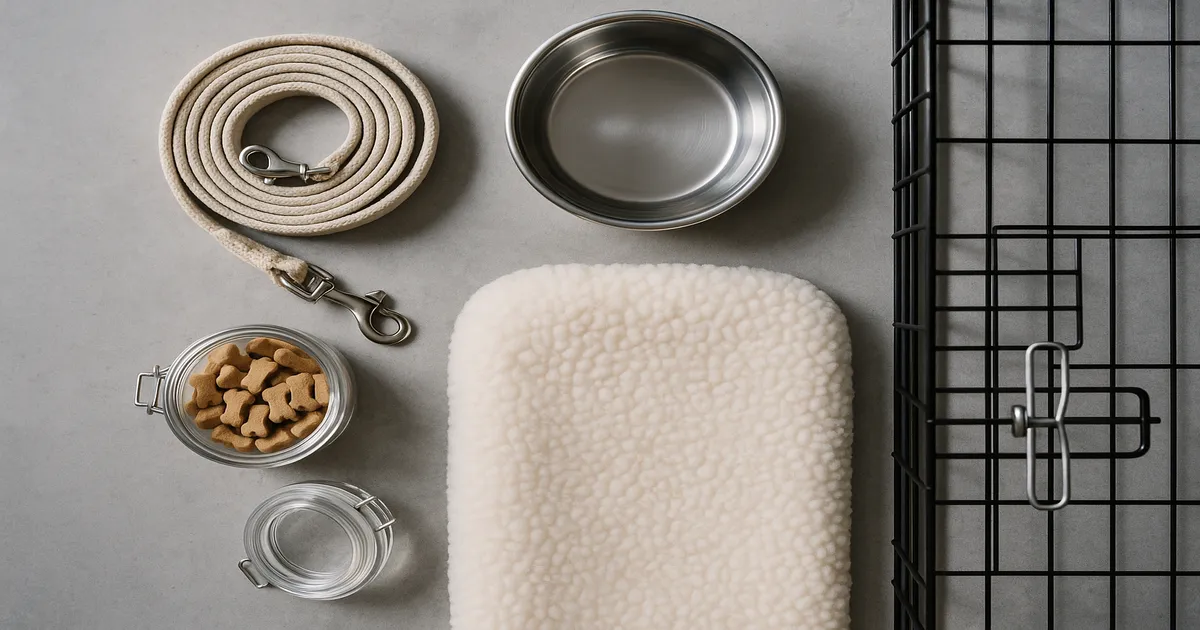
- Wire crates: Best all-around choice for most dogs — maximum ventilation, visibility, and adjustability via divider panels (MidWest Homes)
- Plastic/airline crates: More enclosed and den-like; some anxious dogs settle better with reduced visual stimulation; required for air travel
- Soft-sided crates: Only appropriate for dogs that are already fully crate trained — a determined or anxious dog will be through the wall in minutes
- Furniture-style crates: Fine aesthetically, but offer no training advantages and aren’t recommended during active training
Size, Placement, and Comfort
The crate should let your dog stand without ducking, turn in a full circle, and lie down fully stretched on their side. Too big, and your dog will use one end as a bathroom. Too small, and you’ve created a welfare problem. Use divider panels in a puppy crate to adjust size as they grow.
Never isolate the crate in a basement or garage during initial training. Put it where the family spends time. At night, bedroom placement is strongly recommended — proximity to you significantly reduces puppy vocalization and helps dogs feel safe rather than banished.
For bedding, use something washable and chew-resistant with a scent item that smells like you. Partially cover the crate with a blanket to mimic den conditions, but leave one side open for airflow. Keep the temperature between 65–75°F (18–24°C) and keep the crate out of direct sunlight and away from heating vents.
Do I Give Up on Crate Training? Troubleshooting the 5 Most Common Problems
Problem 1: Non-Stop Whining, Barking, or Howling
The most important skill you can develop is distinguishing protest from panic. Normal protest is intermittent, tends to decrease within 10–30 minutes, and doesn’t involve drooling or self-injury. Separation anxiety vocalization is continuous, escalating, and doesn’t improve over time.
For protest behavior, wait for a 3–5 second pause in the noise, then immediately reward. Never release your dog during active vocalization — that teaches barking is the exit code.
Problem 2: Eliminating Inside the Crate
This usually comes down to one of three things: the crate is too large, the dog has been left longer than their bladder can handle, or there’s a medical issue. Age-based maximums:
- 8 weeks: 1 hour max
- 10–12 weeks: 2 hours max
- 3–4 months: 3 hours max
- 4–6 months: 4 hours max
- 6+ months: 6 hours max (absolute adult maximum)
If a previously clean dog starts having accidents, rule out a UTI or GI issue before assuming it’s behavioral.
Problem 3: Escape Attempts and Crate Destruction
This isn’t stubbornness — it’s fear or frustration, and it’s a safety issue. Broken teeth and lacerations from wire crates are real risks. If your dog is a serious escape artist, upgrade to a heavy-gauge option like the Gunner G1 Kennel or ProSelect Empire Dog Cage. More importantly, address the underlying anxiety — a stronger crate alone doesn’t solve the problem.
Problem 4: Regression After Things Were Going Well
Adolescence (4–18 months), a new baby, a schedule change, or returning to the office after working from home — any of these can unravel crate training that seemed solid. Don’t interpret regression as failure. Go back a step or two in the protocol and rebuild. It goes faster the second time.
Problem 5: True Separation Anxiety
For dogs with genuine clinical separation anxiety, crating is contraindicated. Confinement intensifies the panic response rather than containing it. These dogs need a veterinary behavioral consultation, possible medication (fluoxetine, clomipramine, or situational anxiolytics), and a behavior modification program built around systematic desensitization to departures — not crate training.
The Crate Training Protocol That Actually Works
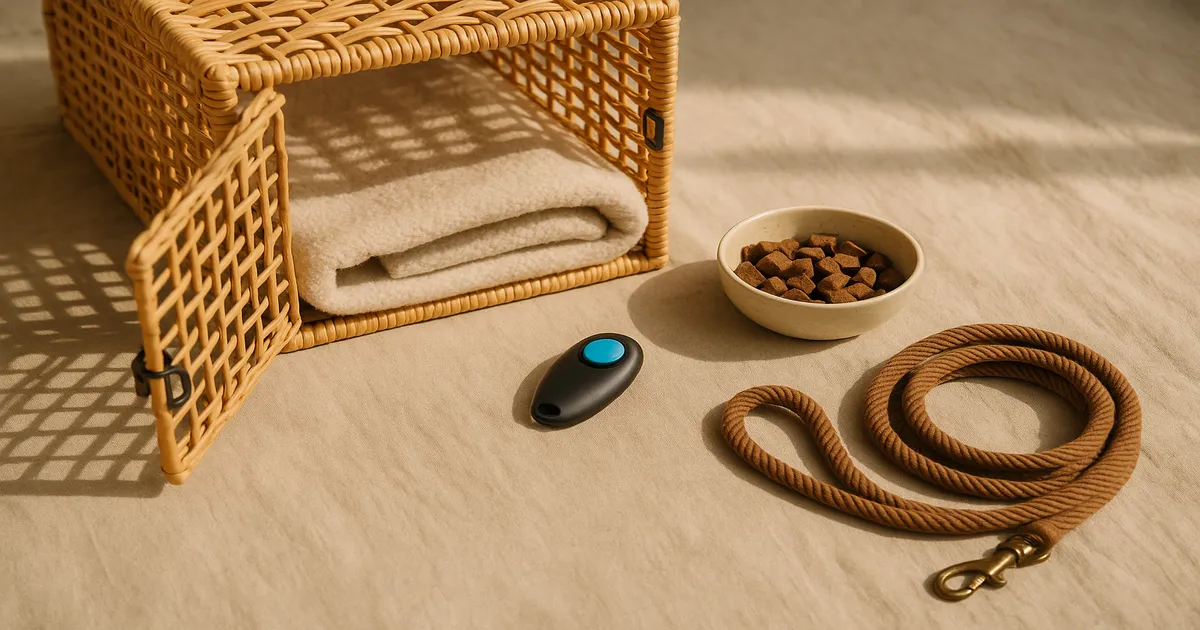
Phase 1 — Introduction (Days 1–3): Remove the door or prop it open. Toss high-value treats inside throughout the day and let your dog investigate at their own pace. Feed meals near the crate, then gradually inside it. Goal: dog enters voluntarily without hesitation.
Phase 2 — Door Conditioning (Days 3–7): Close the door for 5–10 seconds while your dog eats or chews, then open it before any distress appears. Gradually work up to 1–5 minutes with you in the room. Always end on a success. Goal: dog stays calm with the door closed and you present.
Phase 3 — Building Duration (Week 2): Increase closed-door time to 5–30 minutes in small increments. Start leaving the room briefly. A stuffed Kong is your best tool here. Goal: dog settles calmly for 30 minutes with you out of sight.
Phase 4 — Departure Training (Weeks 2–3): Begin leaving the house for 5–10 minutes, then gradually extend. Keep departures and arrivals calm and neutral — no emotional goodbyes, no excited greetings. Goal: dog rests calmly for 2–4 hours during your absence.
Phase 5 — Nighttime Crating: Start with the crate in your bedroom. Puppies under 16 weeks will need 1–2 overnight bathroom trips — set an alarm based on age-appropriate bladder capacity rather than waiting for crying. If you want the crate out of your room eventually, move it gradually over 2–4 weeks.
The reinforcement rules you cannot break:
- Use positive reinforcement only — punishment-based crating creates fear and dramatically increases failure rates
- Reward calm behavior inside the crate, not just entry
- Once the behavior is established, switch to variable ratio reinforcement (reward sometimes, not always) — this creates the most durable learning
- Never use the crate as punishment. This is the single most damaging mistake owners make, and it’s very hard to undo
When You Should Actually Give Up on Crate Training
Some situations genuinely call for a different approach, and there’s no shame in that:
- Diagnosed clinical separation anxiety
- Physical disability making crate entry painful or difficult
- Senior dogs with cognitive dysfunction who become disoriented in confined spaces
- Owners who genuinely cannot commit the time the process requires
A dog-proofed room or a large exercise pen is a legitimate, welfare-positive alternative — not a consolation prize. Many dogs do beautifully with a baby-gated kitchen or laundry room. The goal is always safety and wellbeing, not crate training for its own sake.
If your dog shows continuous escalating distress, causes self-injury, or has severe escape attempts that don’t respond to troubleshooting, consult a certified veterinary behaviorist or certified applied animal behaviorist (CAAB). That’s not failure — it’s the right next step.
Frequently Asked Questions
How long should crate training take before a dog settles?
Most dogs with no prior trauma or anxiety settle reliably within 1–3 weeks of consistent training. Rescue dogs, anxious dogs, and independent breeds may need 4–16 weeks. If you’re still seeing significant distress after 4 weeks of proper protocol, reassess your approach or consult a professional — but don’t automatically give up.
Is it cruel to let a dog cry in a crate at night?
It depends on what kind of crying you’re hearing. Intermittent whining that gradually decreases is normal protest behavior and is not harmful. Continuous, escalating distress that doesn’t improve is a different matter entirely. Placing the crate in your bedroom dramatically reduces nighttime vocalization for most puppies.
How do I know if my dog has separation anxiety or is just protesting?
Protest behavior is intermittent — it comes and goes, decreases over time, and stops when the dog settles. Separation anxiety is continuous and escalating: the dog doesn’t settle, may drool, pant, eliminate, or injure themselves, and shows the same distress whether confined for 2 minutes or 2 hours. Video your dog while you’re out of sight — the footage will usually make the distinction clear.
Can you crate train an older dog?
Absolutely. Adult dogs can learn crate acceptance at any age — many actually settle faster than puppies because they have better impulse control. The process is the same: slow, positive desensitization with high-value rewards. Senior dogs with arthritis or cognitive changes need orthopedic bedding and easy-entry crates, but the method still works.
What if my dog seems to hate the crate no matter what I try?
First, rule out true separation anxiety with a veterinary consultation. Then audit your setup: Is the crate the right size? Is it in a social area of the home? Is your dog adequately exercised before crating? Is the desensitization moving too fast? Most “hates the crate no matter what” situations have a fixable cause. If nothing works after thorough troubleshooting, a dog-proofed room is a perfectly valid alternative.