Quick Answer: Biting is completely normal for a 9-week-old Poodle puppy — it’s how they explored the world with their littermates. The fastest way to stop it is a combination of the yelp-and-redirect method, short time-outs, and consistent redirection to appropriate chew toys. With daily practice, most Poodle puppies show significant improvement within 2–4 weeks.
If you’re asking “how do I get my 9-week-old Poodle puppy to stop biting me,” take a breath — you’re not doing anything wrong, and your puppy isn’t aggressive. You’ve just brought home one of the smartest dogs on the planet at exactly the age when mouthing everything in sight is their full-time job. The good news: that same intelligence that makes them bite with enthusiasm also makes them fast learners.
Why Your 9-Week-Old Poodle Puppy Keeps Biting
Is Biting Normal at This Age?
Yes, completely. At 9 weeks, your puppy has just left their mother and littermates — the creatures they spent every waking moment wrestling, chasing, and mouthing. Biting is how young puppies play, explore, and communicate. Your hands are simply the nearest substitute for a sibling.
Poodles rank second in canine intelligence according to Dr. Stanley Coren’s research, behind only the Border Collie. That brain is already running cause-and-effect experiments on you. Every time your puppy bites and you react — even if you just pull away — they’re collecting data.
How Long Will the Biting Last?
With consistent training, most Poodle puppies show noticeable improvement within 2–4 weeks. Full bite inhibition — where they reliably keep teeth off skin — typically develops by 4–6 months. The teething phase (roughly 12 weeks through 6–7 months) can cause a temporary spike in chewing intensity, so don’t lose hope if biting picks back up around 3–4 months. It’s normal, and it passes.
The techniques that work best:
- Yelp-and-redirect — signal that biting hurts, then offer an alternative
- Time-outs — brief, calm removal of your attention
- Bite inhibition training — teach mouth-pressure control before eliminating mouthing entirely
- Mental enrichment — a tired Poodle bites far less
The Science Behind Poodle Puppy Nipping
What Puppies Learn From Their Littermates
Between 3 and 12 weeks, puppies learn bite inhibition naturally from their mother and siblings. Bite too hard, and a littermate yelps and stops playing. Bite Mom too hard during nursing, and she gets up and walks away. These are the original lessons in cause and effect — and they work because the feedback is instant and consistent.
When your puppy arrives at your home at 8–9 weeks, they haven’t stopped looking for those lessons. They’ve just transferred the classroom to your living room.
The 9-Week Developmental Window
Nine weeks falls squarely inside the primary socialization window (3–12 weeks), the most neurologically sensitive period of a dog’s life. Habits formed now have outsized influence on adult behavior. This is simultaneously the best time to teach your puppy how to interact with the world and the worst time to let bad habits slide.
Why Poodle Intelligence Cuts Both Ways
Poodles learn new behaviors in fewer than five repetitions and follow known commands with 95%+ reliability once trained. The catch: they pick up bad habits just as fast as good ones. A Poodle puppy who discovers that biting produces a dramatic reaction has learned a game — and they’ll play it on repeat.
Flip that around, and the same rapid learning means a Poodle who understands that biting ends playtime will adjust quickly. Consistency is everything with this breed.
Teething Timeline
Your puppy’s 28 baby teeth start loosening around 12–16 weeks. The 42 adult teeth finish erupting around 6–7 months. Chewing provides genuine relief during this window, so having the right outlets matters more than ever.
How to Get Your 9-Week-Old Poodle Puppy to Stop Biting: Step-by-Step
The Yelp-and-Redirect Method
This mimics what littermates do naturally:
- When your puppy bites skin, let out a sharp, high-pitched “Ouch!” — once, not repeatedly.
- Go still and withdraw your hand calmly. Avoid jerking away dramatically; fast movement looks like prey fleeing and can excite them further.
- Wait 2–3 seconds for them to pause.
- Redirect to an appropriate toy and praise enthusiastically when they take it.
Repeat every single time. The lesson only sticks if the consequence is 100% consistent.
Time-Outs Done Right
If yelping doesn’t slow your puppy down — some get more excited by the sound — switch to a calm time-out instead.
- The moment teeth touch skin, say “Too bad” or “Done” in a flat, neutral tone.
- Stand up, turn your back, or step behind a baby gate for 30–60 seconds.
- Return calmly. No big reunion, no scolding — just resume normal interaction.
The consequence here is the loss of your attention, which is genuinely devastating to a social, people-oriented Poodle. Keep it brief and boring.
Teaching Bite Inhibition Through Controlled Play
The goal isn’t to eliminate mouthing overnight — it’s to reduce pressure first, then frequency. Start by only reacting to hard bites. Once those stop, react to medium pressure. Work down progressively over several weeks.
Letting your puppy mouth your hand very gently during play occasionally teaches them that gentle contact is acceptable. That’s a more nuanced and lasting lesson than “no mouth ever.”
Redirecting to Appropriate Chew Toys
Keep toys within arm’s reach at all times during the biting phase. The moment you feel teeth, pivot to a toy immediately.
Good options for a 9-week-old Poodle:
- Stuffed Kongs — fill with peanut butter or wet puppy food and freeze for extra-long engagement
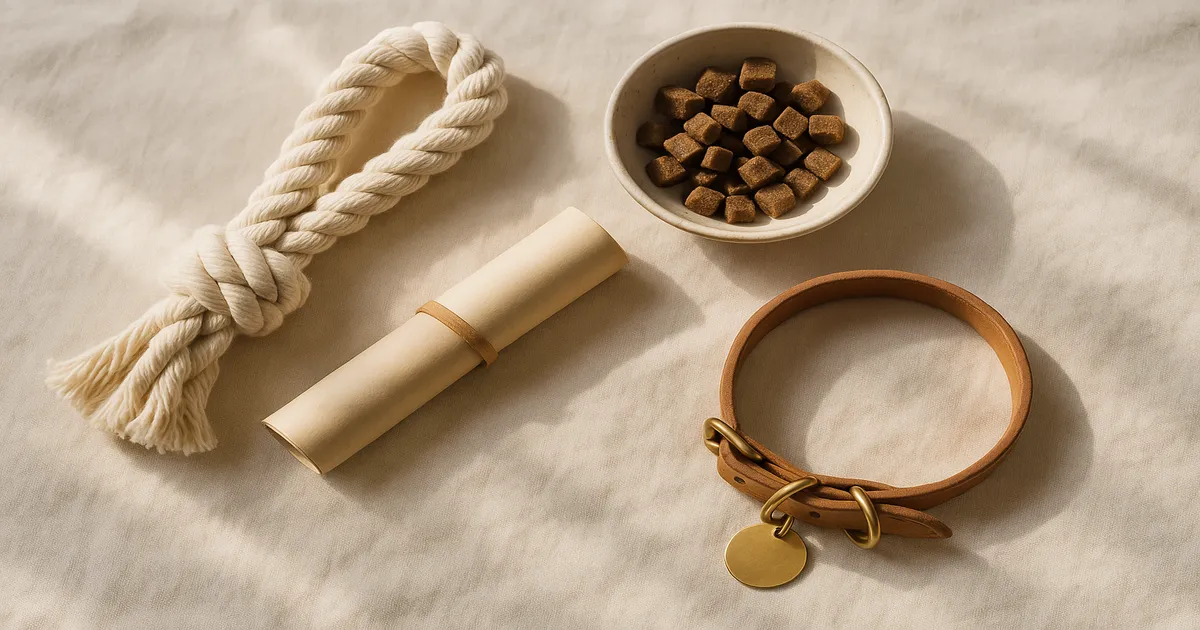
- Rope toys — satisfying to mouth and gentle on baby teeth
- Rubber teething rings — especially useful once teething begins around 12 weeks
A Note on Punishment
Scruff-shaking, muzzle-holding, spray bottles, and alpha-roll techniques are not only ineffective — they actively damage your relationship with this breed. Poodles are emotionally sensitive dogs. Harsh corrections don’t teach them what to do; they teach them that you’re unpredictable. A Poodle who is afraid of you doesn’t bite less — they bite defensively, which is a much harder problem to fix.
Exercise and Mental Stimulation: Your Secret Weapon
How Much Exercise Does a 9-Week-Old Poodle Need?
Veterinary guidelines recommend 5 minutes of structured exercise per month of age, twice daily, to protect developing growth plates. At 9 weeks (roughly 2 months old), that’s about 10 minutes of leash walking per session. Free play in a safe, enclosed space is fine and doesn’t need to be timed.
Keep Training Sessions Short
Limit training sessions to 5 minutes maximum, several times throughout the day. An overstimulated puppy bites frantically — you’ll recognize this as the “zoomie biting” that tends to hit in the evening. Short, successful sessions beat one long, chaotic one every time.
Mental Enrichment That Actually Tires Them Out
Physical exercise alone won’t cut it with this breed. Mental work is often more exhausting than a walk for a high-intelligence dog. Try:
- Puzzle feeders — feed meals from them instead of a bowl (Outward Hound Nina Ottosson Dog Brick)
- Nose work — hide a small treat under one of three cups and let them sniff it out
- Trick training — “sit,” “down,” and “touch” are all achievable at 9 weeks
Every training session simultaneously tires your puppy mentally, reinforces your role as the source of good things, and builds impulse control — all of which reduce biting.
Socialization at 9 Weeks: How It Reduces Biting Long-Term
The Critical Window (8–16 Weeks)
The experiences your puppy has between 8 and 16 weeks shape their behavior for life. A well-socialized Poodle is calmer, more confident, and far less likely to bite reactively than one who was sheltered during this window.
Safe Socialization Before Full Vaccination
Your puppy won’t be fully vaccinated until around 16 weeks, but waiting that long to socialize carries its own risks. Safe options include:
- Puppy classes with health-screened dogs (most require proof of first vaccines)
- Carrying your puppy in public to expose them to sounds, surfaces, and people without ground contact
- Controlled home visits with vaccinated, healthy adult dogs
Handling Exercises That Prevent Defensive Biting
Start now: gently touch your puppy’s paws, ears, mouth, and tail daily while giving small, soft treats. This desensitizes them to handling so they don’t bite defensively during grooming or vet exams later. Even two minutes a day makes a meaningful difference over weeks.
Quick-Reference Care Notes for Your 9-Week-Old Poodle
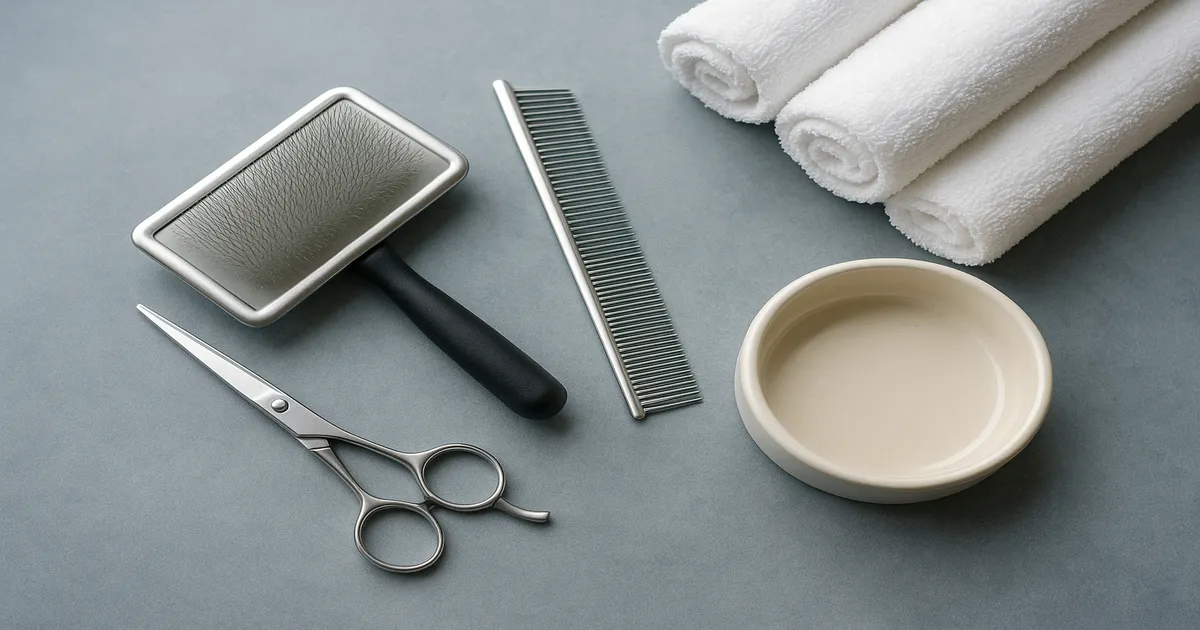
Grooming: Start brushing immediately — not because the soft puppy coat needs it desperately, but because the habit does. Use a soft slicker brush and keep sessions under two minutes at first. A puppy who grows up being touched and brushed daily becomes an adult who tolerates grooming calmly.
Feeding: Feed 3–4 times daily on a consistent schedule. Toy Poodles in particular are prone to hypoglycemia (low blood sugar) if meals are skipped — watch for lethargy, trembling, or disorientation and call your vet immediately if you see these signs. Choose an AAFCO-certified puppy food with a named meat protein as the first ingredient. Standard Poodle puppies should eat a large-breed puppy formula to support controlled bone growth.
Health watch: A few conditions worth knowing about early — Legg-Calvé-Perthes disease and patellar luxation are more common in Toy and Miniature Poodles, and Poodles of all sizes are prone to ear infections due to their floppy ears and hair inside the ear canal. Check and clean ears every 1–2 weeks.
Vaccination: At your first vet visit (ideally within the first week home), your puppy will typically receive their DHPP booster and Bordetella vaccine. Bring any records from your breeder.
Frequently Asked Questions
At what age do Poodle puppies stop biting?
Most show significant improvement by 4–5 months with consistent training. Biting typically reduces substantially by 3–4 months, may spike again during peak teething at 4–5 months, then settles. Full bite inhibition is usually established by 6 months in well-trained puppies.
Is it normal for a 9-week-old puppy to bite hard enough to break skin?
Yes — puppies this age haven’t yet learned to control bite pressure. That’s exactly what bite inhibition training teaches. A Standard Poodle puppy can absolutely break skin at this age. It isn’t aggression; it’s a puppy who doesn’t yet understand that humans are more fragile than littermates.
Should I yelp or say “ouch” when my puppy bites me?
Either works. The key is that it’s sharp, brief, and immediate — one clear sound the moment teeth touch skin, then stillness. Don’t repeat it or escalate into scolding, which can excite some puppies further. If your puppy gets more wound up when you yelp, skip it entirely and go straight to a calm time-out.
Why does my Poodle puppy bite me more than anyone else?
Almost certainly because you’re their primary attachment figure — the person they’re most comfortable with and most excited to engage. Puppies tend to be more inhibited around strangers and more uninhibited with the people they love. It’s a sign of bonding, not disrespect, though it absolutely still needs to be trained out.
Do Doodle mixes bite the same way?
Yes. Labradoodles, Goldendoodles, Bernedoodles, and other Poodle crosses inherit the same mouthing tendencies and the same intelligence. Everything in this article applies equally to them. The Poodle genes in a Doodle are a feature, not a bug — lean into the trainability.