Quick Answer: You can’t stop a short-haired dog from shedding entirely, but you can reduce it by 60–80% with the right approach. The five pillars are consistent brushing with the correct tool, regular baths with a deshedding shampoo, omega-rich nutrition, stress reduction through exercise and routine, and vet checks to rule out underlying health issues.
If you’re wondering how to stop a short-haired dog from shedding like crazy, the first thing to accept is that “stop” isn’t quite the right word — but “dramatically reduce” absolutely is. Short-haired breeds like Labrador Retrievers, Beagles, Rottweilers, and Dalmatians can shed enough fur in a week to stuff a small pillow. The good news? A consistent routine keeps most of that hair in the trash can instead of on your couch.
Why Short-Haired Dogs Shed So Much
The Hair Growth Cycle
Every dog hair passes through four phases: anagen (active growth), catagen (transition), telogen (resting), and exogen (shedding). In many short-haired breeds, this cycle runs faster than in long-haired dogs. Hairs reach the shedding phase more quickly, which means more turnover, more often.
Double Coat vs. Single Coat
This distinction matters more than most owners realize.
- Double-coated breeds (Labs, Beagles, Rottweilers, Basset Hounds) have a dense undercoat beneath short guard hairs. Twice a year — typically spring and fall — they “blow” their coats, releasing staggering volumes of fur in a compressed window.
- Single-coated breeds (Boxers, Dobermans, Vizslas, Weimaraners) have no undercoat. They don’t blow their coat dramatically, but they shed steadily year-round as individual hairs complete their cycle.
How Indoor Living Makes It Worse
Dogs evolved to shed seasonally in response to changing daylight. Artificial indoor lighting disrupts those photoperiod cues, tricking the body into shedding continuously regardless of season. If your dog lives mostly indoors, expect consistent shedding rather than neat seasonal bursts.
Shedding Intensity by Breed
| Breed | Coat Type | Shedding Level |
|---|---|---|
| Labrador Retriever | Short double | Very heavy |
| Rottweiler | Short double | Heavy |
| Basset Hound | Short dense double | Heavy |
| Beagle | Short double | Moderate–heavy |
| German Shorthaired Pointer | Short double | Moderate–heavy |
| Dalmatian | Short fine dense | Moderate (but penetrates fabric) |
| Boxer | Short single | Moderate |
| Doberman Pinscher | Short single | Moderate |
| Vizsla | Short single | Moderate |
| Bulldog | Short fine | Low–moderate |
How to Stop a Short-Haired Dog from Shedding Like Crazy: Brushing First
Choosing the Right Tool for Your Dog’s Coat
The wrong brush wastes your time. The right one removes 60–80% of loose hair before it ever reaches your furniture.
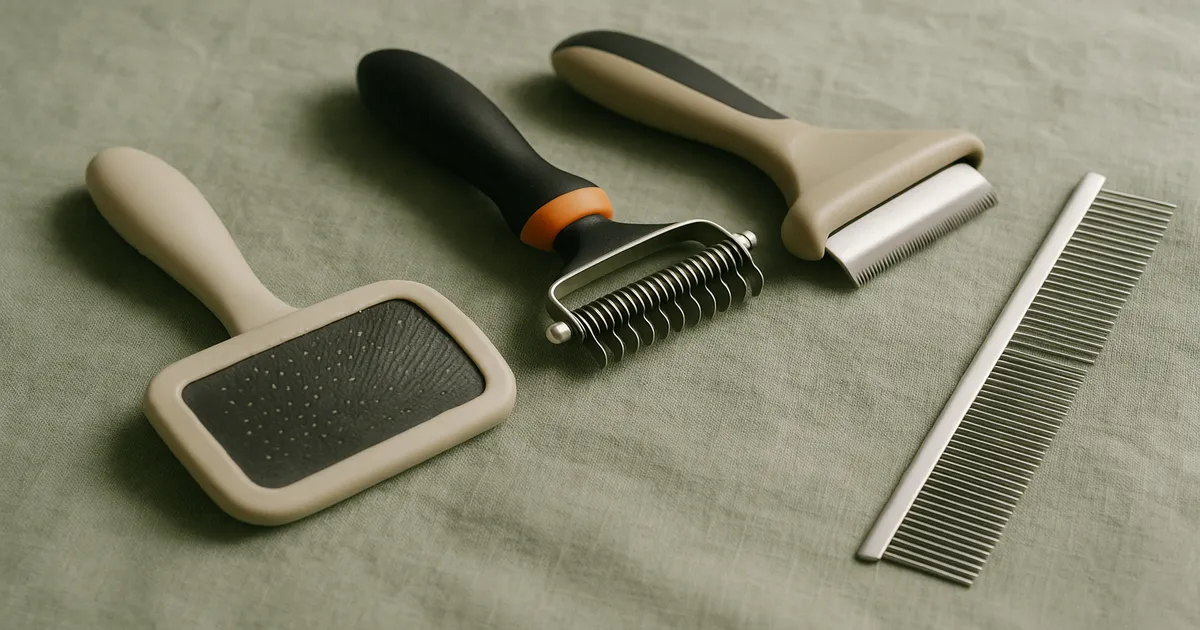
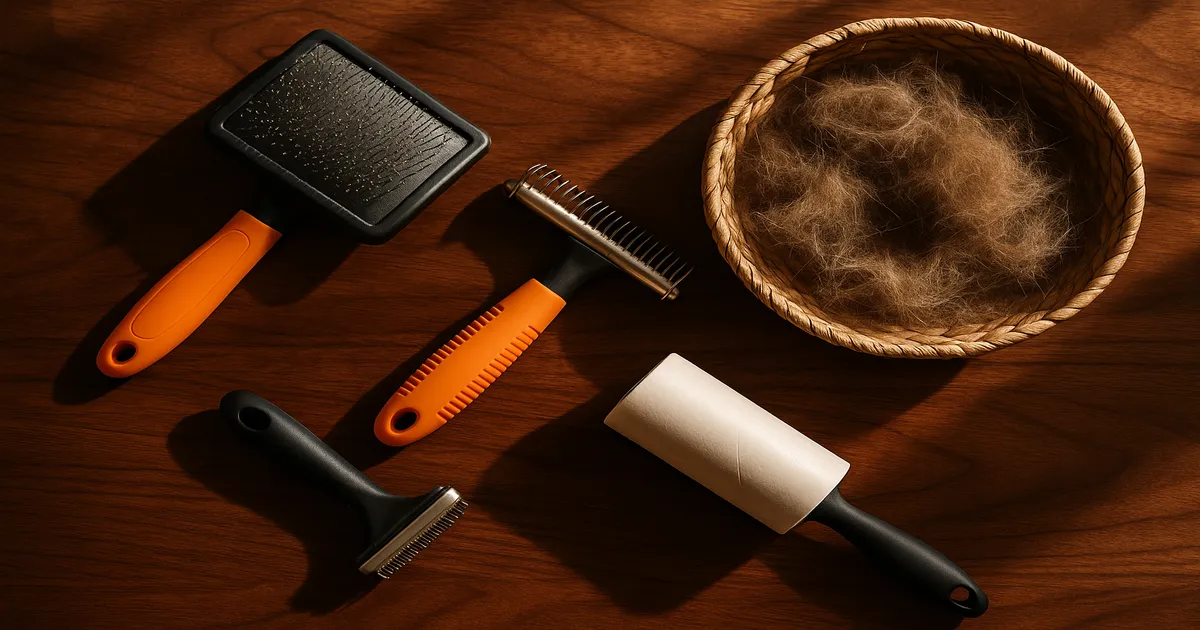
- Double-coated breeds (Labs, Beagles, Rottweilers): A deshedding rake reaches through the outer coat and pulls loose undercoat. The FURminator Short Hair Dog Deshedding Tool is the most widely used option among professional groomers. Follow up with a rubber curry brush to stimulate circulation and collect surface hair.
- Single-coated breeds (Boxers, Dobermans, Vizslas): Skip the deshedding rake entirely — it can damage a coat with no undercoat to cushion it. A rubber curry brush or grooming mitt is all you need.
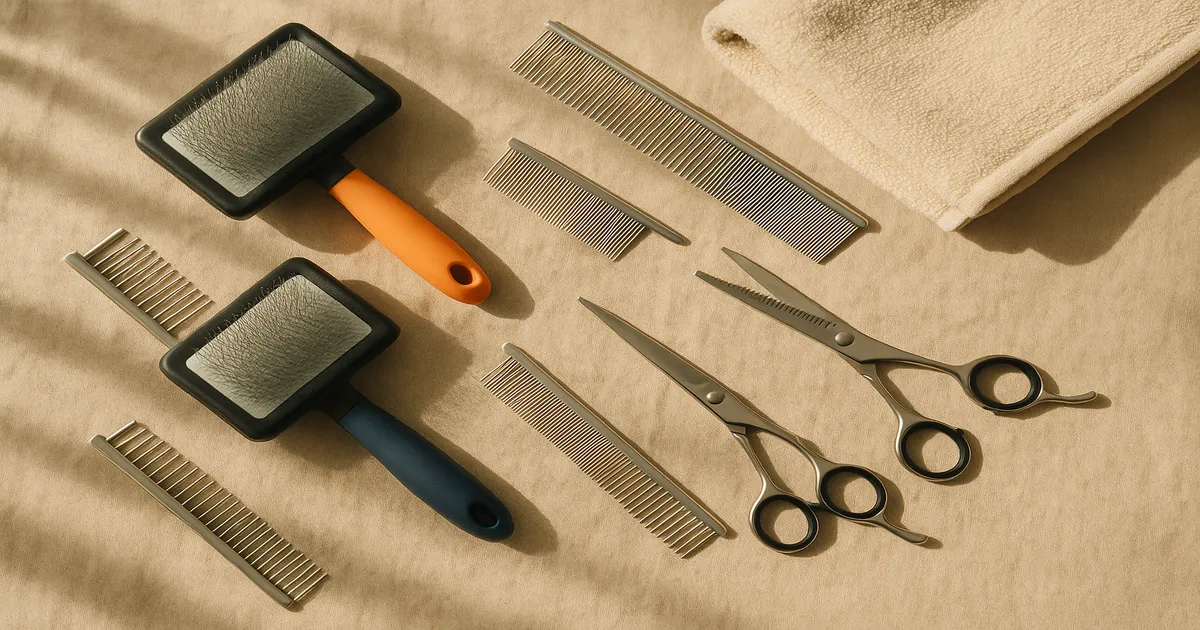
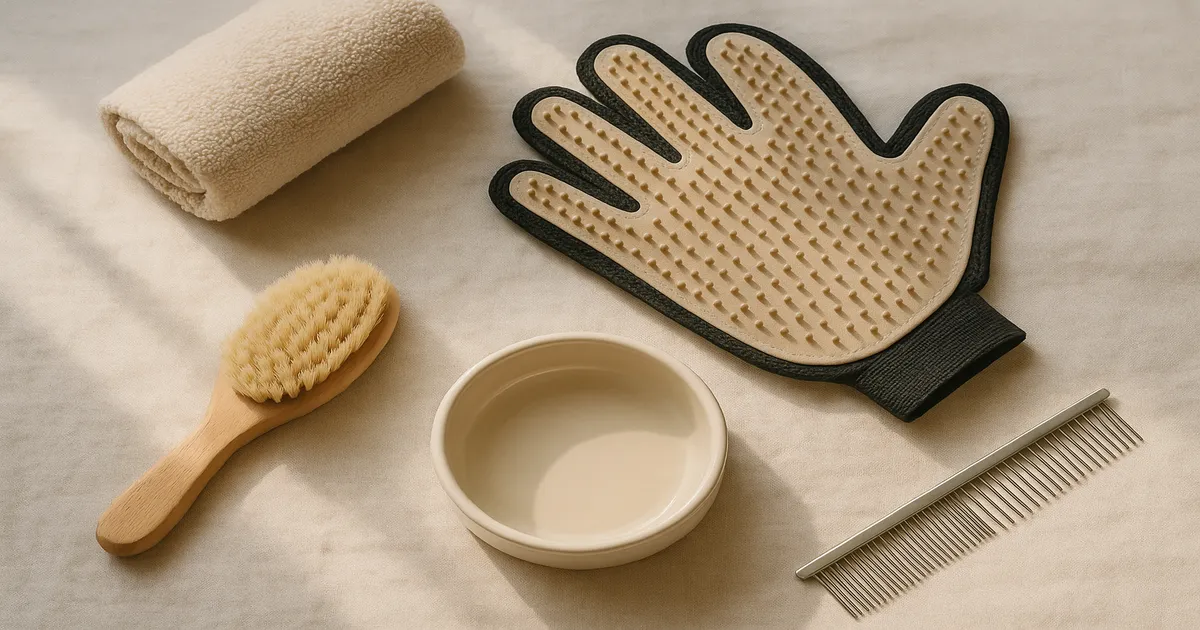
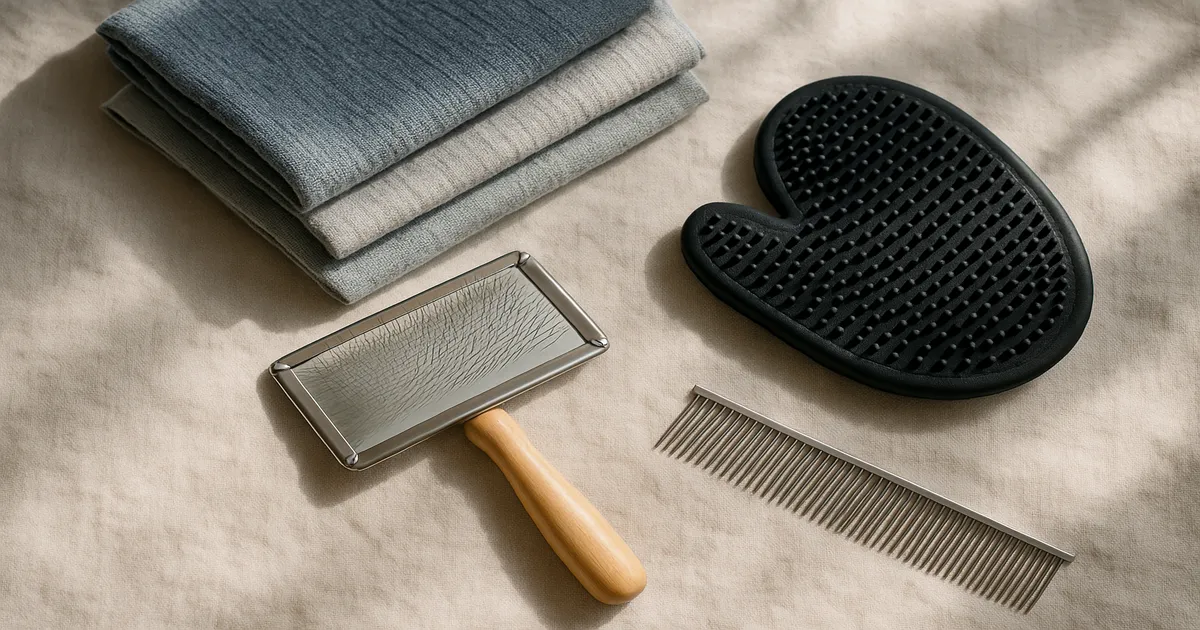
- Fine dense coats (Dalmatians, Bulldogs): Use a rubber curry brush plus a fine-toothed comb, then finish with a damp chamois cloth to capture needle-like hairs before they embed in your sofa.
For dogs who dislike traditional brushes, grooming gloves are a great alternative — the sensation feels more like petting, which most dogs accept readily.
How to Use a Deshedding Tool Correctly
- Lightly mist the coat with a detangling spray — never brush a dry, dirty coat.
- Work in sections: head → neck → shoulders → back → sides → hindquarters → tail.
- Brush in the direction of hair growth using short, overlapping strokes.
- Spend no more than 10–15 minutes per section to avoid irritating the skin.
- Finish with a bristle brush to smooth the coat and distribute natural oils.
How Often Should You Brush?
- Normal periods: 3–4 times per week for double-coated breeds; 2–3 times for single-coated.
- During coat blows: Daily brushing is the only way to stay ahead of the avalanche.
Consistency matters more than duration. A five-minute daily brush beats a 30-minute weekly session when it comes to keeping loose hair under control.
Bathing Routine That Actually Reduces Shedding
How Often to Bathe a Short-Haired Shedding Dog
Over-bathing strips the coat’s natural oils, which paradoxically increases shedding and skin flaking. Aim for:
- Double-coated breeds: Every 4–6 weeks.
- Single-coated breeds: Every 4–8 weeks.
During a seasonal coat blow, a warm bath followed immediately by thorough blow-drying and brushing is a powerful strategy. It consolidates weeks of loose undercoat into one concentrated session.
What to Look For in a Deshedding Shampoo
Ignore marketing claims and read the ingredient list instead. Effective deshedding shampoos contain omega-3 and omega-6 fatty acids (which strengthen hair follicles), oatmeal (which soothes inflamed skin), aloe vera (which moisturizes and reduces dander), and vitamin E (which supports follicle health). Avoid anything with sulfates, artificial fragrances, or parabens — these irritate skin and make shedding worse.
The FURminator deShedding Ultra Premium Dog Shampoo is widely used by professional groomers. For added moisture without weighing down a short coat, Bio-Groom Super Cream Dog Conditioner is another groomer favorite.
Step-by-Step Bath Technique
- Brush thoroughly before getting the dog wet.
- Wet the coat completely to the skin — short coats can be surprisingly water-resistant.
- Work deshedding shampoo into the skin using a rubber curry brush or your fingers.
- Let the shampoo sit for 5–10 minutes.
- Rinse completely — residue left on the skin directly increases shedding.
- Apply conditioner and let sit for 3–5 minutes, then rinse thoroughly.
- Towel dry, then use a high-velocity pet dryer while brushing to blast out remaining loose undercoat. The volume of fur that comes out in this step is genuinely astonishing.
Nutrition and Supplements That Support a Healthier Coat
How Diet Affects Shedding Volume
A poor-quality diet produces brittle, easily shed hairs and dry, flaky skin. If the first ingredient on your dog’s food label is corn, wheat, or a vague “meat by-product,” the coat is usually the first place you’ll see it. Look for a named protein source — chicken, salmon, or beef — as the first ingredient. Foods naturally rich in animal fats support coat quality from the inside out.
Omega-3 and Omega-6 Fatty Acids
These are the most evidence-backed nutrients for reducing shedding. Omega-3s — found in fish oil and flaxseed — reduce skin inflammation and strengthen the hair shaft. Omega-6s support the skin barrier that keeps follicles healthy. A daily fish oil supplement is one of the simplest, highest-impact changes you can make. (Zesty Paws Pure Wild Alaskan Salmon Oil) Look for products that list EPA and DHA content specifically; most owners see a noticeable difference in coat quality within 6–8 weeks.
Biotin, zinc, and vitamin E also play supporting roles in coat health. Many quality coat supplements combine all of these in a single chew. (Vetri-Science Canine Plus Senior Multivitamin)
What Makes Shedding Worse
- Artificial preservatives (BHA, BHT, ethoxyquin)
- Low-quality fillers like corn syrup and grain fragments
- Sudden diet changes — transition any new food over 7–10 days to avoid a temporary shedding spike
Exercise, Stress, and Their Surprising Link to Shedding
How Stress Hormones Trigger Excessive Shedding
Chronic stress elevates cortisol, which disrupts the hair growth cycle and pushes more hairs into the shedding phase at once. It’s the same mechanism behind stress-related hair loss in humans. Dogs who are under-exercised, bored, or frequently anxious often shed noticeably more than their well-stimulated counterparts.
Exercise Requirements for Common Short-Haired Breeds
| Breed | Daily Minimum | Good Activities |
|---|---|---|
| Labrador Retriever | 60–90 min | Swimming, fetch, running |
| German Shorthaired Pointer | 90–120 min | Running, field work, agility |
| Boxer | 60–90 min | Running, play sessions |
| Dalmatian | 60–90 min | Running, fetch |
| Beagle | 45–60 min | Leash walks, nose work |
| Rottweiler | 60–80 min | Structured walks, obedience |
| Basset Hound | 30–45 min | Slow walks, scent games |
| Bulldog | 20–30 min | Short walks (heat-sensitive) |
Exercise also improves circulation to hair follicles, which supports healthier coat growth overall.
Mental Stimulation That Reduces Stress-Related Shedding
Physical exercise alone isn’t always enough — especially for intelligent hunting and sporting breeds. Mental enrichment lowers cortisol just as effectively as a run.
- Puzzle feeders and snuffle mats make mealtime cognitively engaging.
- Lick mats loaded with peanut butter or wet food provide calming, repetitive stimulation.
- Nose work — hiding treats around the house or yard — taps into natural scent-drive instincts.
- Short training sessions (10–15 minutes, twice daily using positive reinforcement) provide structure and build confidence.
Consistent daily routines also reduce ambient anxiety. Regular feeding times, walk schedules, and a predictable sleep spot all contribute to a lower baseline cortisol level. If your dog is frequently left alone for long stretches, a stuffed Kong at departure time can meaningfully reduce separation stress.
When Shedding Is a Health Warning Sign
Normal Shedding vs. Abnormal Hair Loss
Heavy shedding in short-haired breeds is normal. Patchy hair loss is not. The key distinction is whether the coat is thinning uniformly or showing bald spots, broken hairs, or inflamed skin.
Several health conditions can dramatically increase shedding beyond normal levels:
- Hypothyroidism — underactive thyroid leads to a dull, thinning coat and dry skin
- Cushing’s disease — excess cortisol causes symmetrical hair loss, often on the flanks and belly
- Parasites — fleas and mange mites cause intense scratching that damages follicles
- Fungal infections — ringworm causes circular patches of hair loss
- Food or contact allergies — chronic skin inflammation accelerates shedding
Warning Signs That Warrant a Vet Visit
Don’t wait if you notice:
- Bald patches or asymmetrical thinning
- Red, flaky, or inflamed skin
- Excessive scratching, licking, or chewing at the coat
- Dull, brittle, or easily broken hairs
- A sudden dramatic increase in shedding outside of seasonal coat blows
No grooming routine can compensate for an underlying health problem. If the coat doesn’t improve after 6–8 weeks of consistent grooming and nutrition upgrades, schedule a vet check.
Complete Home Grooming Routine to Minimize Shedding
Daily, Weekly, and Monthly Task Checklist
Daily:
- Quick pass with a grooming glove or rubber curry brush (2–3 minutes)
- Check for mats, debris, or early skin irritation
Weekly:
- Full brushing session with the appropriate tool (10–20 minutes)
- Check ears for odor or redness
- Wipe facial folds if applicable (Bulldogs, Mastiffs)
Monthly:
- Full bath with deshedding shampoo and high-velocity drying
- Nail trim
- Thorough ear cleaning
Nail Trimming
Overgrown nails alter your dog’s gait and put stress on joints — a real concern for larger short-haired breeds. Trim every 3–4 weeks. The rule of thumb: if you hear clicking on hard floors, they’re overdue. Always keep styptic powder on hand in case you nick the quick.
- Small breeds: Guillotine-style clippers (Millers Forge Professional Nail Clip)
- Large breeds: Scissor-style clippers
- Nervous dogs: A rotary grinder is quieter and removes the risk of splitting (Dremel 7300-PT Pet Nail Grooming Tool)
Ear Cleaning
Floppy-eared breeds like Basset Hounds and Beagles are especially prone to moisture buildup and infections. Clean ears every 2–4 weeks and after every swim or bath.
- Apply a veterinarian-approved ear solution generously into the canal. (Virbac Epi-Otic Advanced Ear Cleanser)
- Massage the base of the ear for 20–30 seconds.
- Let the dog shake, then wipe the outer canal with a cotton ball. Never insert a cotton swab into the ear canal.
When to Book a Professional Deshedding Treatment
Professional groomers have high-velocity dryers and the time to do extended brushing sessions that simply outperform most home efforts — especially during coat blows. For heavy shedders, a professional deshedding treatment every 6–8 weeks (typically $40–$100+ depending on size and location) is a worthwhile investment. Think of it as the deep clean that resets the baseline.
Frequently Asked Questions: How to Stop a Short-Haired Dog from Shedding Like Crazy
Do short-haired dogs shed more than long-haired dogs?
Often, yes — especially double-coated short-haired breeds like Labs and Rottweilers. Short hairs are also harder to spot on furniture before they accumulate. Long-haired breeds tend to have slower hair growth cycles, and their shed hairs are easier to collect before they embed in fabric.
What is the best deshedding tool for short-haired dogs?
It depends on coat type. For double-coated breeds (Labs, Beagles, Rottweilers), a FURminator-style deshedding rake is the gold standard. For single-coated breeds (Boxers, Dobermans, Vizslas), a rubber curry brush is more appropriate and won’t damage the coat. Never use a deshedding rake on a single-layer coat.
Can fish oil supplements really reduce dog shedding?
Yes, and it’s one of the most well-supported interventions available. Omega-3 fatty acids from fish oil reduce skin inflammation, strengthen the hair shaft, and improve overall coat condition. Most owners see a noticeable difference within 6–8 weeks of consistent supplementation. Look for products that list EPA and DHA amounts on the label.
Is it normal for a short-haired dog to shed year-round?
Completely normal, particularly for dogs that live indoors under artificial lighting. Natural shedding is triggered by daylight changes, but indoor lighting disrupts those signals, causing continuous shedding rather than neat seasonal cycles. Double-coated breeds will still have heavier periods in spring and fall, but some level of year-round shedding is the baseline for most short-haired dogs.
How long does it take to see results from a new grooming and nutrition routine?
Most owners notice a meaningful reduction in loose hair within 2–4 weeks of consistent brushing and bathing. Coat quality improvements from dietary changes and supplements take longer — typically 6–8 weeks — because you’re waiting for new, healthier hairs to grow in. Stick with the routine; the results are cumulative.