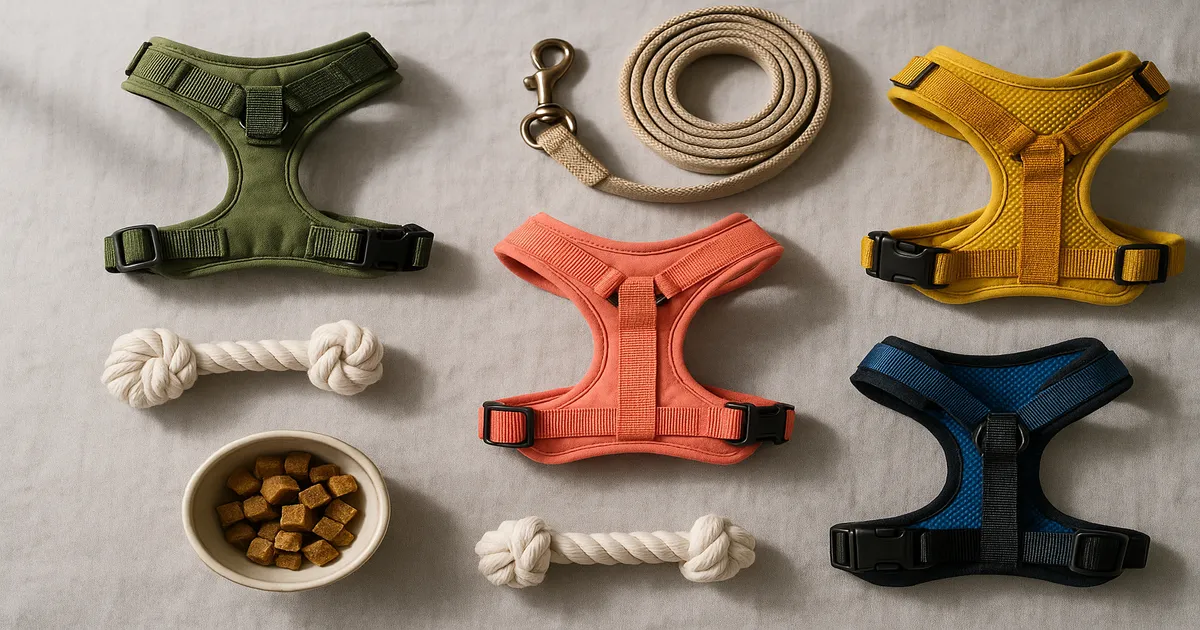
Quick Answer: The Ruffwear Front Range Harness is our top overall pick — its Y-front chest design keeps straps off the shoulder joint so your dog moves freely, while dual clips give you genuine pull management. On a tighter budget, the PetSafe Easy Walk Harness is the easiest entry point for moderate pullers and first-time harness users. The best dog harnesses for dogs who pull but still need to move comfortably depend on your dog’s size, coat type, and pulling intensity — read on for tailored recommendations.
Finding the best dog harnesses for dogs who pull but still need to move comfortably is genuinely tricky. Most anti-pull designs work by restricting something — and that’s exactly the tension you’re trying to resolve. The good news is that a handful of harnesses have cracked this problem, using smart geometry and quality materials to redirect pulling momentum without pinching shoulder joints or causing chafing. This guide breaks down seven of the best, so you can match the right harness to your specific dog.
What to Look For in a Harness for Dogs Who Pull
Clip Position: Front, Back, or Dual?
Clip position is the single biggest factor in how a harness handles pulling. A front clip attaches at the chest and uses your dog’s own momentum against them — when they lunge forward, they’re steered sideways toward you instead. It’s the most effective passive anti-pull mechanism available. A back clip attaches between the shoulder blades, offers no pull correction, but allows the most natural gait. A dual-clip harness gives you both, which is the sweet spot for dogs that need pull management on busy streets but freedom of movement on trails.
Freedom of Movement vs. Pull-Correction
Here’s the honest reality: the more aggressively a harness corrects pulling, the more likely it is to interfere with your dog’s natural gait. Harnesses with a straight chest strap sitting across the front of the shoulder can restrict the forward reach of the front legs — a real problem for active and working-heritage breeds. Look for a Y-front or V-front chest piece that channels straps down through the center of the chest, keeping them clear of the shoulder joint entirely. This design is the key differentiator between harnesses that truly allow comfortable movement and those that just claim to.
Padding and Chafe Prevention
Short-coated breeds — Vizslas, Boxers, Dobermans, Labs — have very little fur cushioning between skin and nylon strap. Chafing in the armpit region can develop within a single long walk on an unpadded harness. Double-coated breeds like Huskies and Golden Retrievers face a different problem: harness straps mat and tangle the undercoat. For short-coated dogs, look for neoprene, fleece, or velvet lining at contact points. For double-coated dogs, wider padded panels distribute pressure and reduce matting.
Adjustability and Fit
A harness with only two adjustment points will rarely fit well enough to work properly. Four or five points let you dial in a precise fit that’s snug without restricting breathing or shoulder movement. This matters especially for barrel-chested breeds (Bulldogs, Staffordshire Bull Terriers) and deep-chested breeds (Greyhounds, Weimaraners), which fall outside the proportions most harnesses are designed around.
Hardware Durability
Plastic hardware is fine for small, moderate pullers. For large, powerful breeds — Rottweilers, Belgian Malinois, Huskies — you want metal hardware: aluminum or steel rings and buckles rated for high-force use. Plastic clips can stress-fracture under repeated explosive lunge forces, and a broken harness at the wrong moment is a genuine safety risk.
Breed-Specific Considerations
Brachycephalic dogs (Bulldogs, French Bulldogs, Pugs) must avoid any harness design that compresses the chest — they’re already working harder to breathe. Dogs with hip or elbow dysplasia need harnesses that don’t alter their gait or add asymmetric pressure to joints. A poorly fitted front-clip harness can worsen elbow stress by pulling the shoulder inward on every stride. Large working breeds need load-rated hardware, full stop.
At-a-Glance Comparison: Best Harnesses for Dogs Who Pull
| Product | Best For | Clip Type | Size Range | Padding Level | Movement Freedom | Hardware | Price |
|---|---|---|---|---|---|---|---|
| Ruffwear Front Range | Active dogs, all-day wear | Dual (front + back) | XXS–XL | Foam-padded panels | Excellent (Y-front) | Aluminum | $$ |
| PetSafe Easy Walk | Budget, moderate pullers | Front only | XS–XL | Minimal | Good | Plastic | $ |
| Julius-K9 IDC Powerharness | Large/working breeds | Back (some dual) | Baby 1–4XL | Moderate | Good | Load-rated metal | $$$ |
| Freedom No-Pull (2 Hounds) | Positive-R training | Dual (front + back) | XS–XL+ | Velvet-lined | Very Good | Plastic/metal mix | $$ |
| Kurgo Tru-Fit Smart Harness | Walk + car travel | Dual (front + back) | XS–XL | Padded chest plate | Good | Steel | $$ |
| Rabbitgoo No-Pull | Small/medium, warm climates | Dual (front + back) | XS–XL | Padded mesh | Good | Plastic | $ |
| Ruffwear Web Master | Reactive/escape-prone dogs | Back primary | XXS–XL | Foam handle + panels | Moderate | Aluminum | $$$ |
PetSafe Easy Walk Harness
The Easy Walk is the most widely recommended entry-level anti-pull harness for good reason. Its martingale chest loop applies gentle, directional pressure when your dog pulls forward — steering them toward you rather than punishing them. Color-coded buckles (pink and gray) tell you immediately which side is which, so fitting is fast even for first-timers.
Key specs:
- Price: $
- Clip type: Front only (martingale chest loop)
- Sizes: XS–XL
- Material: Nylon webbing, minimal padding
- Hardware: Plastic buckles
Pros
- Immediately effective for moderate pullers right out of the box
- Color-coded fitting system makes it genuinely beginner-friendly
- Affordable and widely available in pet stores and online
- Works well for social, enthusiasm-driven pullers (Labs, Goldens, Boxers)
Cons
- Chest strap migrates upward toward the throat on deep-chested breeds — requires frequent readjustment
- Minimal padding causes armpit chafing on short-coated dogs during walks longer than an hour
- Plastic hardware shows wear quickly under daily use with strong dogs
- Not suitable for very powerful or reactive dogs
Best for: Budget-conscious owners with enthusiastic but manageable pullers who want a simple, effective starting point.
Ruffwear Front Range Harness
The Front Range is the harness we’d put on most active dogs that pull. Its Y-front chest design is the critical detail — straps route through the center of the chest rather than across the shoulder, so front leg movement stays completely unrestricted. Paired with foam-padded panels, aluminum hardware, and four adjustment points, it’s built for dogs that actually go places.
Key specs:
- Price: $$
- Clip type: Dual (front aluminum V-ring + back load ring)
- Sizes: XXS–XL
- Material: Foam-padded panels, reflective trim
- Hardware: Aluminum rings
- Adjustment points: Four
- Machine washable: Yes
Pros
- Y-front design genuinely preserves natural gait — no shoulder restriction
- Aluminum hardware holds up to daily use with strong, active dogs
- Four adjustment points allow a precise fit across a wide range of body types
- Reflective trim adds real low-light visibility; comfortable for all-day wear
Cons
- Higher price than budget options
- Front clip alone is less effective on very powerful pullers — works best with a coupler leash
- Can run narrow on barrel-chested breeds; measure carefully before ordering
Best for: Active, sporting, and working-heritage dogs that need both pull management and unrestricted movement — our top overall pick.
Julius-K9 IDC Powerharness
The Julius-K9 is a European working-dog harness with a reputation built on large, powerful breeds. German Shepherds, Rottweilers, Belgian Malinois, Huskies — this is what those dogs wear in professional and sport contexts. The standard version is back-clip only, which means it won’t actively redirect pulling, but the build quality and hardware are in a different league from lifestyle harnesses.
Key specs:
- Price: $$$
- Clip type: Back-clip primary (some versions include front ring)
- Sizes: Baby 1 through 4XL (including giant breeds)
- Material: Dense nylon webbing, reflective piping
- Hardware: Load-rated metal buckles
- Features: Top handle, interchangeable Velcro ID patches, quick-release buckle
Pros
- Exceptional durability for large and working breeds — hardware rated for high-force use
- Top handle gives you immediate close control when you need it
- Enormous size range covers giant breeds that other harnesses don’t accommodate
- Interchangeable ID patches are a practical, underrated feature
Cons
- Back-clip only on the standard version means it won’t steer a puller — requires pairing with structured training
- Bulkier and heavier than lifestyle harnesses; can be warm in hot climates
- Premium price point
Best for: Large and working-breed owners who prioritize durability and all-day wearability over active pull-correction — pair it with leash training rather than relying on it as a standalone solution.
Freedom No-Pull Harness by 2 Hounds Design
The Freedom Harness takes a thoughtful approach to pull correction. Its velvet-lined martingale chest loop applies gentle, consistent feedback without jerking or restricting shoulder movement. What sets it apart is the included bungee coupler leash, which clips to both the front and back rings simultaneously — absorbing sudden lunge force before it reaches your arm or your dog’s joints.
Key specs:
- Price: $$
- Clip type: Dual (front + back)
- Sizes: XS–XL+
- Material: Nylon webbing, velvet lining at contact points
- Includes: Bungee coupler leash
- Adjustment points: Multiple
Pros
- Velvet lining dramatically reduces chafing risk — a standout feature for short-coated and sensitive-skinned dogs
- Bungee leash absorbs sudden lunge force, reducing impact on both owner and dog
- Strong endorsement from positive-reinforcement trainers; works with training rather than against it
- Dual-clip versatility for different environments and training stages
Cons
- Velvet lining requires careful hand-washing and dries slowly
- Bungee leash adds length that can be awkward in tight urban spaces or crowded sidewalks
- Sizing chart requires careful measurement; don’t guess on this one
Best for: Owners committed to positive-reinforcement training who want a chafe-resistant, dual-clip harness for medium to large enthusiastic pullers.
Kurgo Tru-Fit Smart Harness
The Tru-Fit solves a specific problem: you need one harness that handles daily walks with a puller and keeps your dog safely restrained in the car. Its steel nesting buckle is crash-tested to 75 lbs of force — one of the few harnesses with genuine vehicle restraint certification. Five adjustment points mean it fits a wide range of body types precisely.
Key specs:
- Price: $$
- Clip type: Dual (front + back)
- Sizes: XS–XL
- Material: Nylon webbing, padded chest plate
- Hardware: Steel nesting buckle (crash-tested)
- Adjustment points: Five
- Crash-tested: Yes (75 lbs force)
Pros
- Crash-tested car restraint functionality — a real safety feature, not a marketing claim
- Five adjustment points deliver a precise, secure fit for varied body shapes
- Steel hardware offers durability beyond plastic-buckle competitors
- Padded chest plate distributes pressure evenly during walks
Cons
- Steel hardware adds noticeable weight compared to lifestyle harnesses
- Front clip placement is less ergonomic than competitors on some body types — test before committing
- Padding is functional rather than plush; not ideal for very sensitive-skinned dogs
Best for: Owners who travel frequently with their dog and want a single harness that handles both daily walks and safe car travel.
Rabbitgoo No-Pull Dog Harness
The Rabbitgoo punches well above its price point. For under $30, you get dual-clip functionality, padded mesh panels, reflective strips, and four adjustment points — features that cost significantly more on branded alternatives. It’s best suited for small to medium dogs, and the mesh construction makes it a smart pick for warm climates where ventilation matters.
Key specs:
- Price: $
- Clip type: Dual (front + back)
- Sizes: XS–XL
- Material: Padded mesh body
- Hardware: Plastic quick-snap buckles
- Reflective strips: Yes
- Adjustment points: Four
Pros
- Outstanding value — dual-clip versatility at a budget price
- Padded mesh reduces chafing and aids airflow, useful in hot weather
- Reflective strips add meaningful low-light safety
- Quick-snap buckles make on/off fast and easy
Cons
- Mesh padding compresses and loses cushioning quickly under heavy daily use
- Plastic hardware shows wear faster than metal alternatives — plan to replace annually with daily use
- Sizing is inconsistent across batches; measure carefully and check the size chart for each purchase
Best for: Small to medium moderate pullers, especially in warm climates — the best budget dual-clip option if you measure carefully and accept the hardware trade-offs.
Ruffwear Web Master Harness
The Web Master was originally designed for search-and-rescue dogs, and it shows. Five adjustment points, a padded foam handle on top, and aluminum hardware throughout make this the most secure harness in the category. It’s not primarily an anti-pull harness — the back clip won’t redirect pulling — but for reactive dogs, escape artists, or any situation where you need absolute physical control, nothing else comes close.
Key specs:
- Price: $$$
- Clip type: Back-clip primary
- Sizes: XXS–XL
- Material: Foam-padded panels and handle, reflective trim
- Hardware: Aluminum
- Adjustment points: Five
- Designed for: Lifting/supporting dogs, high-security containment
Pros
- Virtually escape-proof — the five-point fit closes off the gaps that escape artists exploit
- Padded top handle allows immediate close control and safe dog lifting, useful for dogs with mobility issues
- Exceptional durability; holds up to years of daily hard use
- Ideal for reactive dogs in high-distraction environments
Cons
- Premium price — the most expensive harness in this roundup
- Back-clip only means no passive pull-correction; requires active training alongside it
- Heavier than everyday lifestyle harnesses; overkill for calm or moderate pullers
Best for: Reactive dogs, escape artists, and owners of large powerful breeds who need maximum physical control and security above all else.
Our Verdict: Which Harness Is Right for Your Dog?
Best Overall: Ruffwear Front Range Harness
The Front Range balances anti-pull function, freedom of movement, and build quality better than anything else in this price range. The Y-front design is the real differentiator — your dog walks naturally, and you still have meaningful control. It’s the harness we’d recommend to most active dog owners as a first serious harness.
Best Budget Pick: PetSafe Easy Walk Harness
New to harness training, or working with a moderate puller? The Easy Walk gets you 80% of the results for a fraction of the price. Start here, learn what you need, and upgrade if your dog outgrows it.
Best for Large and Working Breeds: Julius-K9 IDC Powerharness
When you’re managing a 90-lb (41 kg) working breed, hardware integrity matters more than anything else. The Julius-K9’s load-rated metal hardware and enormous size range make it the right tool for German Shepherds, Rottweilers, Belgian Malinois, and similar breeds. Pair it with structured leash training — the harness alone won’t stop a determined working dog from pulling.
Best for Positive-Reinforcement Training: Freedom No-Pull Harness by 2 Hounds Design
If you’re working with a trainer or following a positive-reinforcement program, the Freedom Harness is built around that philosophy. The bungee coupler leash and velvet lining make it the most comfortable dual-clip option for dogs with sensitive skin. For extra training support, pairing it with high-value treats — such as Zuke’s Mini Naturals training treats — can accelerate loose-leash progress significantly.
Best for Travel and Walking Combined: Kurgo Tru-Fit Smart Harness
One harness that does both jobs well — that’s the Tru-Fit’s whole pitch, and it delivers. If your dog rides in the car regularly, the crash-tested steel buckle is worth the slight weight penalty.
Best for Reactive or Escape-Prone Dogs: Ruffwear Web Master Harness
For dogs that lunge, spin out of harnesses, or need to be physically managed in public, the Web Master is the only harness in this roundup that provides that level of security. It’s an investment, but the right one for the right dog.
Best Budget Dual-Clip Option: Rabbitgoo No-Pull Dog Harness
Small to medium dog, warm climate, tight budget — the Rabbitgoo is the answer. Measure carefully and plan to replace it more frequently than a premium harness.
A note on training: No harness replaces loose-leash walking skills. Every harness in this guide works significantly better when paired with positive-reinforcement training — rewarding your dog for walking beside you rather than ahead of you. A treat pouch worn at your hip, such as the Ruffwear Treat Trader Bag, keeps rewards accessible and your hands free during training sessions. If your dog has orthopedic conditions, severe reactivity, or is brachycephalic, consult your veterinarian before choosing a harness, and consider working with a certified professional trainer (CPDT-KA or similar) to address the pulling behavior at its source.
Frequently Asked Questions About the Best Dog Harnesses for Dogs Who Pull
Do no-pull harnesses actually stop dogs from pulling?
They reduce pulling — they don’t eliminate it on their own. Front-clip and dual-clip harnesses redirect your dog’s momentum toward you when they pull forward, making pulling less effective and more awkward. Over time, combined with consistent positive-reinforcement training, most dogs pull significantly less. A harness without training is just management; training without a harness is harder than it needs to be. Use both.
Is a front-clip or back-clip harness better for a dog that pulls?
Front-clip harnesses are more effective at reducing pulling because they redirect your dog’s momentum sideways when they lunge forward. Back-clip harnesses allow the most natural gait but provide no passive pull correction — they’re better suited for dogs that are already trained or for activities like hiking where free movement matters most. A dual-clip harness gives you both options, making it the most versatile choice for a dog in active training.
Can a harness hurt my dog if they pull hard against it?
Yes, if it fits poorly or is the wrong design. A chest strap sitting across the front of the shoulder joint can restrict the forward reach of the front legs and, over time, contribute to shoulder and elbow stress — a real concern for dogs predisposed to elbow dysplasia. Poorly padded harnesses cause armpit chafing within a single long walk on short-coated breeds. Check the fit weekly, inspect the armpit area for redness or hair loss, and replace any harness that shows signs of causing pressure sores.
What harness is best for a large, powerful dog that pulls?
For large, powerful breeds, prioritize load-rated metal hardware above everything else. The Julius-K9 IDC Powerharness is the best choice for working and guardian breeds that need all-day durability and a wide size range. For reactive or escape-prone large dogs, the Ruffwear Web Master adds a level of physical security that no other harness in this category matches. Plastic hardware on a 90-lb (41 kg) dog that lunges is a liability — it will fail eventually.
How do I know if my dog’s harness fits correctly?
Use the two-finger rule: you should be able to slide two fingers under any strap, but no more. If you can fit your whole hand under a strap, it’s too loose; if you can’t fit two fingers, it’s too tight. Pay particular attention to the armpit region — this is where chafing almost always starts. Check that the chest piece sits centered on the sternum and isn’t riding up toward the throat. Re-check the fit every few weeks, and any time your dog’s weight changes noticeably — a harness that fit perfectly at 40 lbs (18 kg) may not fit well at 50 lbs (23 kg).