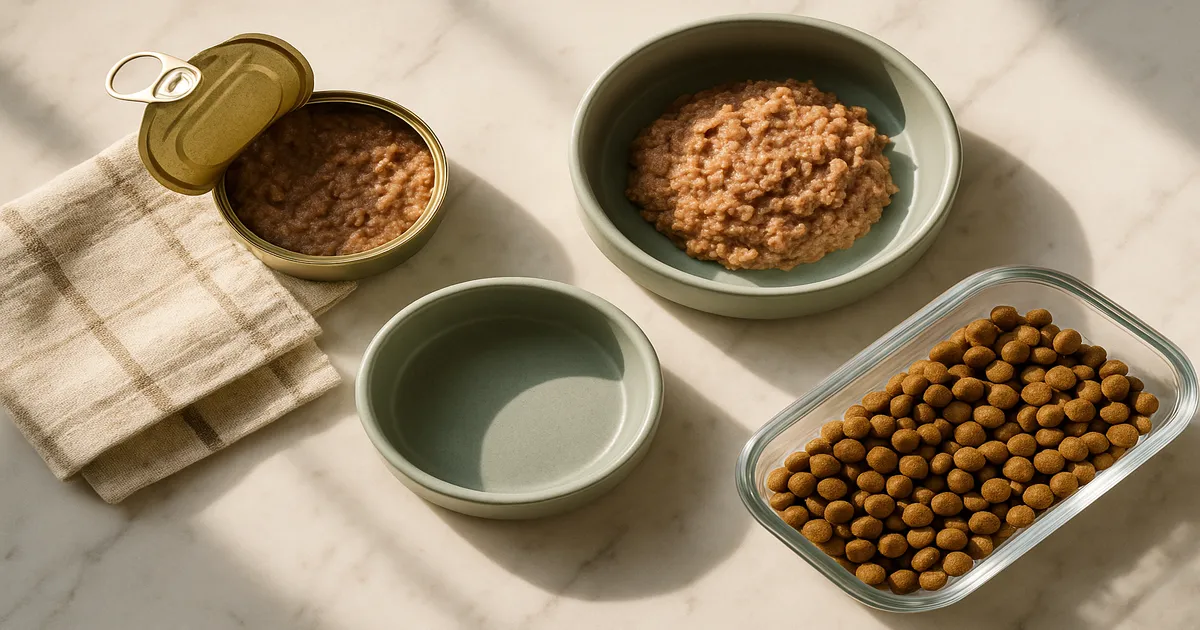
Quick Answer: Wet pet food starts to spoil within 1–2 hours at room temperature. The most effective methods for keeping wet food fresh in the bowl are serving only what your pet will finish in 15–20 minutes, washing stainless steel bowls after every meal, and warming refrigerated food before serving so pets eat it promptly. For owners away from home, a refrigerated automatic feeder is the best solution.
If you’ve ever typed into a forum “does anyone have a good method for keeping wet food fresh in the bowl?” — you’re in good company. It’s one of the most common frustrations pet owners face, and the answer isn’t a single magic trick. It’s a handful of simple habits used together. Here’s what food safety science and veterinary guidance actually recommend.
The Best Methods for Keeping Wet Food Fresh in the Bowl
The Golden Rules at a Glance
- Portion correctly — serve only what your pet will finish in 15–20 minutes
- Follow the 2-hour rule — discard anything left out longer (1 hour in hot weather)
- Use stainless steel bowls and wash them after every single meal
- Warm refrigerated food to around body temperature before serving
- Store opened cans in airtight containers in the fridge for up to 3 days
- Use a refrigerated automatic feeder if you’re regularly away from home
How Long Can Wet Food Safely Sit Out?
| Condition | Safe Time in Bowl |
|---|---|
| Room temperature (70°F / 21°C) | Up to 2 hours |
| Air-conditioned home (65°F / 18°C) | Up to 2–3 hours |
| Hot environment (80°F+ / 27°C+) | 30–60 minutes |
| Refrigerated (38–40°F / 3–4°C) | Up to 3–5 days (sealed container) |
| Frozen | Up to 1–2 months |
The American Veterinary Medical Association aligns with FDA food safety principles in recommending you discard uneaten wet food after no more than 2 hours at room temperature — no exceptions.
Why Wet Pet Food Goes Bad So Quickly
Wet pet food contains 75–82% moisture. That’s great for hydration, but it also creates ideal conditions for bacterial growth. Within 1–2 hours at room temperature, pathogens including Listeria monocytogenes, Salmonella spp., and Staphylococcus aureus can begin multiplying rapidly. The “danger zone” for pet food mirrors human food safety standards: 40–140°F (4–60°C).
Bacterial growth isn’t the only problem. Oxidation begins the moment a can or pouch is opened, causing fats to go rancid and nutrients to degrade. Enzymatic activity in meat-based proteins also continues after opening — which is why food that’s been sitting out starts to smell different and develop an unappetizing texture even before it’s technically unsafe.
Health Risks of Spoiled Wet Food
Eating spoiled wet food can cause vomiting, diarrhea, and bacterial gastroenteritis. In serious cases, Salmonella or Listeria infections require veterinary intervention. Senior pets and immunocompromised animals face elevated risk. There’s also a behavioral cost: a pet that eats something “off” may develop a lasting aversion to that food — or to eating from that bowl altogether.
Environmental Factors That Speed Up Spoilage
- Heat: Temperatures above 80°F dramatically shorten the safe window
- Humidity: High humidity accelerates bacterial growth
- Sunlight: Direct sun on a bowl can make food unsafe in under 30 minutes
- Bowl material: Porous surfaces like plastic or cracked ceramic harbor bacteria even after washing
- Outdoor feeding: Insects can contaminate an uncovered bowl within minutes
Method 1: Portion Control — The Most Effective Strategy
This is the single most impactful change you can make. If your pet finishes the bowl in 15–20 minutes, there’s nothing left to spoil. It sounds obvious, but most owners serve too much at once — especially when transitioning from free-feeding dry kibble.
For cats, aim for 2–3 small meals per day rather than leaving food down all day. Cats are natural hunters who eat small, frequent meals; free-feeding wet food is a recipe for waste and bacterial risk.
Portion Size Guidelines by Pet Size
Dogs (approximate per meal, twice daily):
- Small dogs under 20 lbs (9 kg): ⅓ to ½ can
- Medium dogs 20–50 lbs (9–23 kg): ½ to 1 can
- Large dogs 50–100 lbs (23–45 kg): 1 to 1½ cans
Always check the feeding guide on your specific food’s label and adjust for your pet’s age, activity level, and any veterinary recommendations.
Method 2: Temperature Management
Why Serving Temperature Matters
Cold food straight from the refrigerator is less aromatic and less appealing to most pets — particularly cats. A less-interested pet eats more slowly, which means food sits out longer. Warming food encourages faster, more enthusiastic eating, which solves the freshness problem at its source.
Aim for approximately body temperature: 99–101°F (37–38°C), which mimics the warmth of fresh prey.
- Microwave method: Heat for 5–10 seconds, then stir thoroughly to eliminate hot spots
- Warm water bath: Place the sealed storage container in warm water for 5 minutes
Never serve food above 104°F (40°C). It can burn your pet’s mouth and, once it starts cooling back through the danger zone, bacterial growth accelerates again.
Keeping the Bowl Cool in Warm Environments
In summer or warm climates, cut the safe window to 1 hour. To slow temperature rise:
- Place the bowl on a tile or stone surface rather than carpet
- Use a chilled bowl insert with a non-toxic gel pack underneath
- Keep the feeding area away from direct sunlight, heat vents, and appliances
Method 3: Choosing the Right Bowl
Why Stainless Steel Is the Gold Standard
Stainless steel is non-porous, which means bacteria can’t colonize the surface the way they can with plastic or cracked ceramic. It’s easy to sanitize, doesn’t leach chemicals, and holds up to high-heat dishwasher cycles — all reasons the American Animal Hospital Association (AAHA) points to it for pet food use.
Bowls to Avoid
Plastic bowls develop micro-scratches over time, and those scratches become permanent homes for Pseudomonas and other bacteria that survive normal washing. Plastic is also a known cause of feline chin acne through contact irritation, and plasticizers can leach into acidic pet food.
Ceramic bowls are a reasonable middle ground — their thermal mass can keep food slightly cooler for longer — but any crack or chip in the glaze creates the same bacterial harborage problem as plastic. Inspect ceramic bowls regularly and replace them at the first sign of damage.
Refrigerated Automatic Feeders
For owners who work long hours, a refrigerated automatic feeder is genuinely worth considering. These keep wet food at a safe temperature until your pet is ready to eat — a much better solution than leaving food out and hoping for the best. Look for models with sealed food compartments, programmable portion timers, and easy-clean removable trays.
Method 4: Bowl Hygiene and Storage
How Often Should You Wash the Bowl?
A 2019 NSF International study ranked pet food bowls as the 4th germiest item in the average household, with Salmonella, E. coli, and MRSA detected on unwashed bowls. Wet food bowls should be washed after every single meal — not once a day, not every other day.
- Wash with hot water and dish soap, scrubbing all surfaces
- Rinse completely — soap residue can put pets off their food
- Dishwasher sanitization on a high-heat cycle is ideal for stainless steel and dishwasher-safe ceramics
- Air dry completely before the next use; towel drying can reintroduce bacteria
Once a week, soak the bowl in a solution of 1 tablespoon white vinegar per cup of water for 10 minutes, then rinse thoroughly.
Storing Opened Cans and Pouches
Never store leftover wet food in the opened can — metal oxidation affects both flavor and safety. Instead:
- Transfer to an airtight glass or stainless steel container
- Refrigerate immediately at 38–40°F (3–4°C)
- Use within 3 days (some manufacturers say up to 5, but 3 is the safer guideline)
- Label the container with the date opened
For longer storage, portion wet food into an ice cube tray, freeze, then transfer the cubes to a freezer bag. Thaw individual portions overnight in the refrigerator. Frozen wet food keeps for up to 1–2 months.
Using Covers Between Servings
If your pet walks away mid-meal and you expect them back within 10–15 minutes, covering the bowl with a small plate or silicone stretch lid slows oxidation and prevents the surface from drying out. This helps preserve texture — but it does not extend the 2-hour safety window. Think of it as a short-term fix, not a safety measure.
Cats vs. Dogs: Species-Specific Tips
Why Cats Are Especially Sensitive to Food Freshness
Cats have approximately 200 million scent receptors — compared to a human’s 5 million — which means they detect spoilage, or even just staleness, long before we do. Many cats will refuse food that’s been sitting out for as little as 30–60 minutes, particularly in warm rooms. The texture change is often the bigger trigger: as wet food sits, the surface dries and crusts, and cats notice immediately. Warming food to around 100°F (38°C) before serving mimics fresh prey temperature, boosts aroma, and encourages cats to eat more promptly.
Dogs: Gulpers, Grazers, and Multi-Pet Homes
Most dogs eat wet food quickly, which naturally limits how long it sits in the bowl. If you have a gulper, that’s actually working in your favor. For dogs who graze, a slow feeder or puzzle feeder can extend mealtime engagement without leaving food sitting unattended.
In multi-pet households, food guarding can mean one pet hovers while another barely touches their bowl. Feed pets separately in different rooms so each portion is consumed promptly and no one is stressed at mealtime.
Frequently Asked Questions: Keeping Wet Food Fresh in the Bowl
How long can wet cat food sit out before it goes bad?
No more than 2 hours at room temperature — and that window drops to 30–60 minutes when temperatures exceed 80°F (27°C). Cats’ sensitive noses often cause them to reject food well before it’s technically unsafe, so if your cat is turning their nose up, trust them.
Can I cover my pet’s wet food bowl to keep it fresh longer?
Covering the bowl with a plate or silicone lid slows surface drying and oxidation, which helps preserve texture and aroma. However, it does not make the food safe beyond the 2-hour rule. It’s a short-term texture fix, not a safety measure.
What is the best type of bowl for wet pet food?
Stainless steel is the gold standard — non-porous, bacteria-resistant, easy to sanitize, and durable. Ceramic is a reasonable alternative if it’s lead-free and crack-free. Avoid plastic entirely; micro-scratches harbor bacteria and plastic can cause skin reactions in some cats.
How should I store leftover wet food after opening?
Transfer it to an airtight glass or stainless steel container (never the opened can), refrigerate immediately at 38–40°F (3–4°C), and use within 3 days. For longer storage, freeze in ice cube tray portions and use within 1–2 months. Always label containers with the date opened.
Are refrigerated automatic pet feeders worth it for wet food?
Yes — if you’re regularly away from home for more than a few hours. Refrigerated feeders keep wet food at a safe temperature until scheduled meal times, which eliminates the guesswork entirely. Look for models with sealed compartments, programmable timers, and easy-clean removable trays.