Quick Answer: Cats drink from the bathtub because instinct drives them toward fresh, moving water that’s physically separated from their food — and the tub checks every box. This behavior is usually harmless, but a sudden increase in water-seeking can signal serious medical conditions like chronic kidney disease, diabetes, or hyperthyroidism. If the behavior is new or has intensified, call your vet within one to two days.
If you’ve ever watched your cat ignore a perfectly clean water bowl only to sprint toward the bathtub the moment you turn on the faucet, you’re not alone — and your cat isn’t being difficult. Why cats are obsessed with drinking out of the bathtub has a genuinely fascinating answer rooted in millions of years of feline evolution. Understanding what’s driving the behavior helps you decide whether to embrace it, redirect it, or call your vet.
Why Cats Drink From the Bathtub: The Short Answer
Your cat’s bathtub obsession comes down to instinct. Domestic cats descend from desert wildcats that learned to seek out fresh, moving water away from their food sources. The bathtub — cool, spacious, faucet-equipped, and far from the food bowl — is basically a five-star water destination by feline standards.
The behavior is also self-reinforcing. Once your cat discovers that pawing at the faucet produces water (and a human who rushes in to watch), that pattern gets locked in fast.
Normal vs. red flag: A cat that has always enjoyed the bathtub and is otherwise healthy is almost certainly fine. The warning sign is change — a sudden increase in how much your cat drinks, especially when paired with increased urination, weight loss, or lethargy. Those signs warrant a vet appointment within one to two days, not a wait-and-see approach.
Evolutionary Roots: Why Cats Prefer Unconventional Water Sources
Desert Ancestry and the Instinct for Moving Water
Domestic cats descend from Felis silvestris lybica, the African wildcat, a species that evolved in arid, semi-desert environments where clean water was scarce. Standing water in the wild is far more likely to harbor bacteria and parasites than a moving stream or a freshly disturbed puddle. Over thousands of generations, cats developed a hardwired preference for water that moves, drips, or has recently been disturbed — because that water was safer.
Cats have only been domesticated for roughly 10,000 years. That’s not nearly enough time to override deeply embedded survival instincts.
Why Cats Instinctively Separate Water From Food
Wild felids keep their water sources physically separated from their prey to avoid contamination — blood and organic matter foul a water source quickly. This instinct is alive and well in your living room. Many cats will completely ignore a water bowl placed right next to their food dish, not out of stubbornness, but because proximity to food triggers an ancient “don’t drink here” signal.
How the Bathtub Mimics a Natural Water Source
From your cat’s perspective, the bathtub is remarkably close to ideal. It offers residual cool, fresh water after you shower, a dripping faucet that mimics a running stream, a cool porcelain surface that holds moisture, and — crucially — it’s nowhere near the food bowl. It’s not a quirk. It’s your cat doing exactly what evolution designed them to do.
Behavioral Reasons Your Cat Is Obsessed With the Bathtub
Whisker Fatigue: Why Wide Spaces Beat Narrow Bowls
Cats’ whiskers are packed with proprioceptors connected directly to the nervous system. When a cat drinks from a narrow bowl, the whiskers repeatedly brush the sides, causing genuine discomfort known as whisker fatigue. The bathtub has no edges anywhere near the face — problem solved, from the cat’s point of view.
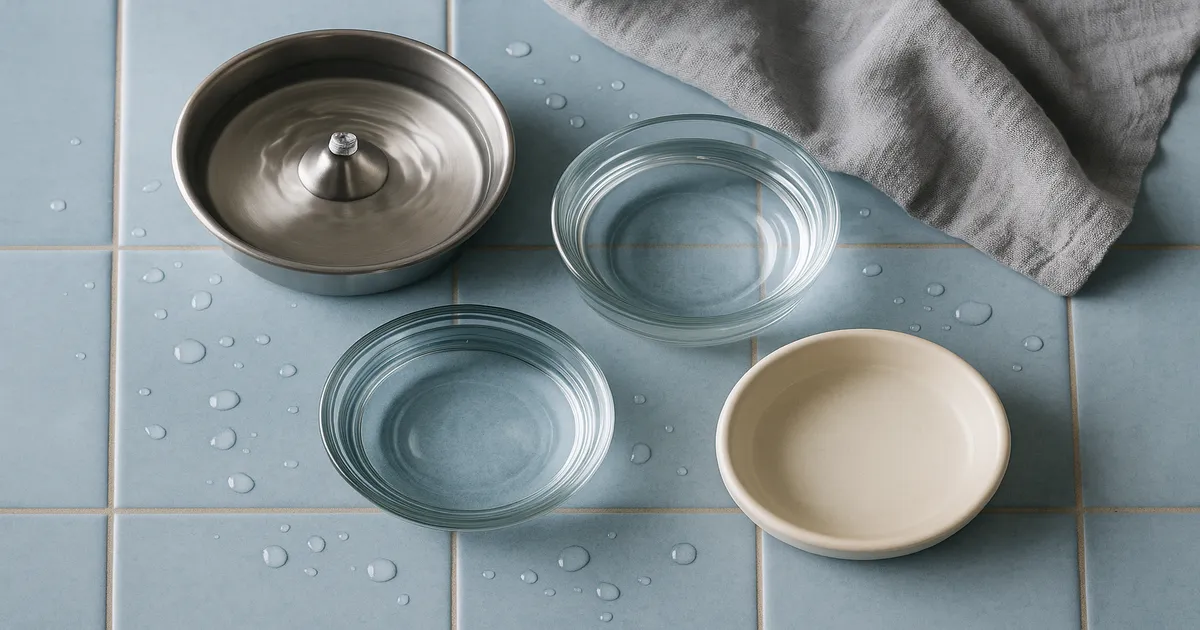
If your cat paws water out of the bowl before drinking, or eats only from the center of the food dish, whisker fatigue is likely a factor. A wide, shallow bowl helps, but a fountain or bathtub will almost always win. Consider a wide stainless steel bowl like the Hepper Nom Nom Bowl as an easy first step.
Novelty, Temperature, and Sensory Appeal
The bathroom is one of the most stimulating rooms in the house for a cat. Cool tiles, echo-rich acoustics, concentrated human scent, and a large porcelain basin that stays noticeably cooler than the rest of the home — especially in summer, when the tub can be 10–15°F cooler than ambient room temperature. Cats are drawn to novelty, and the bathtub delivers a genuinely different sensory experience than a plastic bowl on the kitchen floor.
Attention-Seeking and Learned Behavior
Here’s the part many owners don’t want to hear: you may have trained your cat to do this. The first time your cat sat in the tub and meowed, you probably went to see what was happening. Maybe you turned on the faucet. Your cat filed that information away permanently. Operant conditioning is powerful, and cats are excellent at identifying which behaviors reliably produce a human response.
The fix isn’t punishment — it’s redirection. Reward your cat with attention and a treat near the fountain instead, and ignore tub-related vocalizations when you know the behavior is attention-driven rather than health-driven.
Breeds Most Likely to Obsess Over Water
Some cats are more water-obsessed than others by nature. Breeds with a documented affinity for water include:
- Maine Coon — enthusiastic water players with a well-documented tolerance for moisture
- Turkish Van — nicknamed “the swimming cat”; the breed is noted for an unusual love of water
- Bengal — high-energy and intensely curious; frequently found playing in sinks and tubs
- Norwegian Forest Cat — historically associated with fishing; retains strong water curiosity
- Abyssinian — extremely intelligent and novelty-seeking; prone to unconventional behavior of all kinds
Higher-energy, more curious cats are simply more likely to seek out environmental stimulation wherever they can find it.
Health Warning Signs: When Bathtub Drinking Signals a Medical Problem
What Counts as Too Much Drinking
Normal water intake for a cat is roughly 60–80 mL per kilogram of body weight per day — about 4–6 oz for a typical 10 lb (4.5 kg) cat eating dry food. Polydipsia, or excessive thirst, is defined as intake exceeding 100 mL/kg/day. If you’re refilling the bowl far more often than usual, that threshold may already be crossed.
Cats on wet food drink significantly less from a bowl because they get most of their moisture from food. A sudden increase in drinking in a wet-food cat is therefore especially significant.
Chronic Kidney Disease, Diabetes, and Hyperthyroidism
These three conditions are the most common medical causes of increased thirst in cats, and all three become substantially more prevalent with age.
Chronic kidney disease (CKD) affects approximately one in three cats over age 10. Damaged kidneys lose the ability to concentrate urine, forcing the cat to drink more to compensate. Early signs include increased drinking and urination, weight loss, and decreased appetite.
Diabetes mellitus affects roughly one in 230 cats, with obesity, male sex, and age over eight as key risk factors. Insulin deficiency causes glucose to spill into the urine, pulling water with it. Watch for increased thirst paired with weight loss despite a good appetite and a plantigrade stance — walking flat on the hocks rather than on the toes.
Hyperthyroidism is the most common endocrine disorder in older cats, affecting approximately 10% of cats over age 10. Elevated thyroid hormone accelerates metabolism, driving increased thirst, weight loss despite a ravenous appetite, hyperactivity, and sometimes vomiting. A simple blood test measuring serum T4 can confirm or rule it out.
Urinary Tract Issues
Feline idiopathic cystitis (FIC) accounts for 55–65% of lower urinary tract signs in cats. Stress is a major trigger, and increased water intake is both a symptom and part of the standard treatment protocol — which is why vets often recommend fountains and wet food as first-line interventions. If your cat is straining to urinate, making frequent trips to the litter box, or producing only small amounts of urine, see a vet the same day.
Recommended Vet Screenings by Age
| Age | Recommended Tests |
|---|---|
| Kitten–6 years | Annual wellness exam, baseline bloodwork |
| 7–10 years (Senior) | Biannual exams, CBC, chemistry panel, urinalysis, T4 |
| 10+ years (Geriatric) | Biannual exams, full senior panel including SDMA, blood pressure |
Seek veterinary evaluation within one to two days if bathtub drinking is new, sudden, or accompanied by weight loss, increased urination, or lethargy.
Keeping the Bathtub Safe and Improving Hydration at Home
Toxic Cleaning Products: What Cat Owners Must Know
This is the part of bathtub drinking that genuinely warrants caution. Soap scum, shampoo residue, bleach, phenols, and quaternary ammonium compounds (found in many disinfectant sprays) are all toxic to cats if ingested. The ASPCA Animal Poison Control Center (888-426-4435) lists bathroom cleaning products among the most common household toxin exposures in cats. A cat lapping residual water from a recently cleaned tub can ingest enough chemical residue to cause drooling, vomiting, or worse.
To keep the tub safe:
- Rinse thoroughly with plain water after every cleaning before allowing cat access
- Never leave cleaning solutions standing in the tub
- Choose EPA Safer Choice certified products when possible
- If you use a bleach-based cleaner, allow the tub to air out completely and rinse twice
Why Dry Food Cats Are Often Chronically Thirsty
Prey animals are roughly 70% water. Dry kibble is 6–10% moisture. Cats evolved to get most of their hydration from food, and research from UC Davis School of Veterinary Medicine confirms that cats don’t compensate for dry diets by drinking proportionally more water. The result is a near-constant state of mild dehydration for many kibble-fed cats — which drives them to seek water anywhere they can find it, including the bathtub.
Switching to or incorporating wet food (70–80% moisture) is the single most impactful change you can make. It can double or triple daily water intake without your cat having to drink a drop more from a bowl. You can also add a small amount of low-sodium chicken broth (no onion or garlic) to your cat’s water as a vet-approved flavor enhancer.
Choosing a Cat Water Fountain to Redirect Bathtub Behavior
A good fountain directly mimics the moving water your cat is seeking in the tub, and most cats redirect their behavior quickly once they discover one. The Pioneer Pet Raindrop Stainless Steel Fountain is a strong option — stainless steel resists biofilm, and the gentle flow rate suits most cats. Look for:
- BPA-free or stainless steel construction — plastic fountains harbor biofilm and can cause feline chin acne
- Carbon filtration to remove the chlorine taste that makes tap water unappealing
- Adjustable flow rate so you can find the setting your cat prefers
- Minimum 50–70 oz capacity for a single-cat household
Placement matters as much as the fountain itself. Keep water at least 3–5 feet from the food bowl. Set up multiple stations in different rooms. Place one fountain near the bathroom specifically to give your cat a legitimate alternative to the tub — most cats will take it.
Frequently Asked Questions
Is it safe for my cat to drink from the bathtub?
Generally yes, provided the tub is clean and free of chemical residues. The main risks come from soap scum, shampoo, and cleaning product traces — bleach and phenol-based cleaners are particularly toxic to cats. Rinse the tub thoroughly with plain water after every cleaning before allowing access, and the behavior is typically harmless.
Why is my cat obsessed with drinking out of the bathtub instead of their water bowl?
It comes down to instinct and comfort. Cats evolved to prefer fresh, moving water over stagnant sources, and the bathtub delivers both — especially when the faucet drips. Whisker fatigue also plays a role; many cats find narrow bowls uncomfortable, and the wide-open tub eliminates that problem entirely. A cat water fountain with adjustable flow, like the Catit Flower Fountain, replicates both benefits and gives most cats a reason to abandon the tub.
Can drinking from the bathtub be a sign my cat is sick?
It can be, but context matters enormously. A cat that has always enjoyed the bathtub and is otherwise thriving is almost certainly fine. A sudden or dramatic increase in water-seeking — especially paired with weight loss, increased urination, or lethargy — can signal chronic kidney disease, diabetes, or hyperthyroidism, all of which are treatable when caught early. If the behavior has changed noticeably, call your vet within one to two days.
How do I get my cat to drink from a bowl instead of the bathtub?
Start by switching to a wide, shallow bowl placed well away from the food dish. Then add a fountain near the bathroom to intercept the behavior before your cat reaches the tub. Reward your cat with a treat or brief play session when you see them drinking from the fountain — positive reinforcement works well here. Avoid turning the faucet on as a reward, since that reinforces exactly the habit you’re trying to redirect.
When should I take my cat to the vet for excessive drinking?
Any time the behavior is new, sudden, or has noticeably intensified — especially in a cat over seven years old. Pair that with weight loss, more frequent urination, lethargy, or a ravenous appetite, and you should call the same day or the next morning. For cats over 10, don’t wait: CKD and hyperthyroidism are common, and early detection makes a meaningful difference in outcomes.